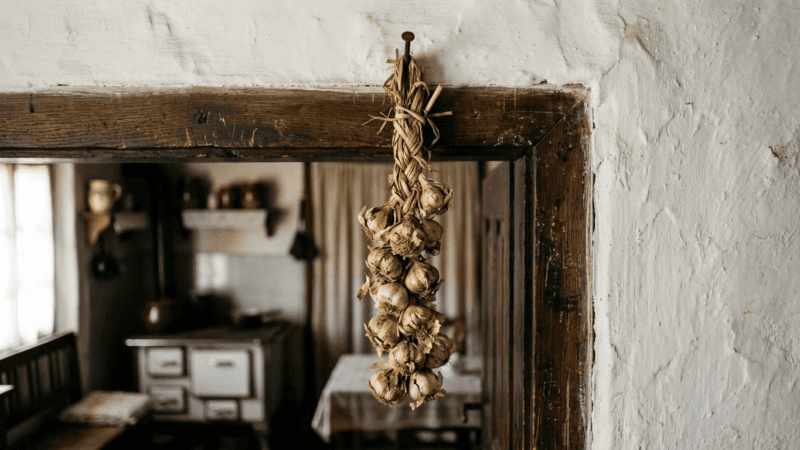
The woman who hung rosemary above her door in sixteenth-century Florence was not separating kitchen from magic: the bundle above the threshold came from the same plant she stripped into bread dough and crushed into medicine. Roman soldiers carried garlic into battle, Greek priests burned bay laurel to receive prophetic vision, and medieval households kept dill growing specifically to prevent witchcraft directed against the family. For most of human history, every person who cooked also understood what each plant could do beyond seasoning food.
That knowledge never disappeared but thinned into specialist information rather than common knowledge, while the plants kept their properties. The rosemary in your windowsill today carries the same energetic signature it carried in a Roman household.
Why Plants Hold Magical Properties
Plants accumulate specific energetic signatures through their chemistry, their growing conditions, their relationship with light and soil, and the accumulated intention of generations of practitioners who worked with them deliberately. A plant like garlic that has been used for protection across Egypt, Greece, Rome, the Slavic countries, Korea, and Japan for thousands of years carries that accumulated intention alongside its sulfuric chemistry.
In most cases, the magical correspondence maps directly onto a physical one: garlic’s antimicrobial compounds correspond to its spiritual reputation for repelling harmful things, rosemary’s preserving antiseptic quality corresponds to its reputation for protection and purification, and sage’s name derives from the Latin salvare, meaning to save or heal. The plant knows what it does, and working with that nature amplifies rather than contradicts it.
Protection Herbs
Rosemary
Rosemary is the most complete protective herb in the standard kitchen and the one with the widest range of documented uses across both Mediterranean and Northern European folk traditions. Its physical properties are strongly antibacterial, antifungal, and preserving, which maps directly onto its magical reputation for fortifying and protecting whatever it touches.
Hang a dried bundle above the entrance, a practice documented from ancient Rome through contemporary Southern European folk tradition. Burn dried rosemary in any room that feels heavy after conflict or illness, as it clears faster than most alternatives. Add it to ritual baths for purification and strengthening, or roll a black candle in crushed dried rosemary before lighting it for protection work.
Rosemary also strengthens memory and mental clarity. Ancient Greek scholars wore it during study and examination because it sharpens focus. Keep a sprig at your workspace when you need to think clearly or retain information.

Garlic
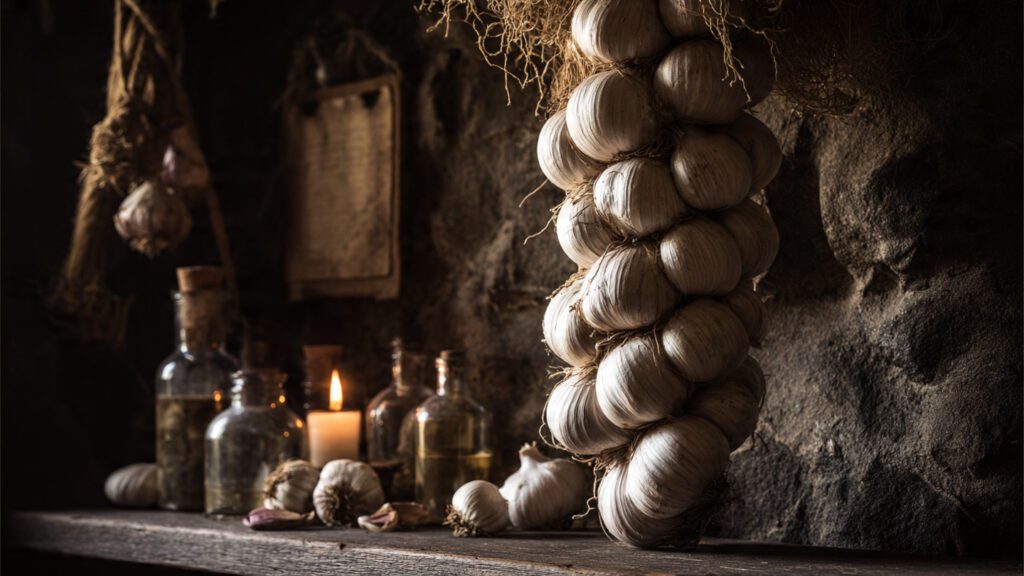
Garlic’s protective reputation is documented in ancient Egypt, Greece, Rome, Slavic folk magic, and East Asian traditions with remarkable consistency, which functions almost as a proof of concept for plant magic working through accumulated cross-cultural intention. The mechanism is direct: garlic’s allicin and sulfur compounds literally destroy harmful organisms on contact, and this physical action maps onto its spiritual reputation for repelling harmful influences.
Place whole bulbs at the four corners of your home or hang braided garlic in the kitchen, eat garlic or carry a clove before situations where you feel energetically vulnerable, and add it to floor washes for strongly protective cleansing. Dispose of old garlic off your property rather than indoors, as it absorbs what it protects against.
Garlic has an aggressive, driving quality. Unlike rosemary, which creates and maintains barriers, garlic actively expels. Use it when something needs to leave rather than simply stay out.
Cloves
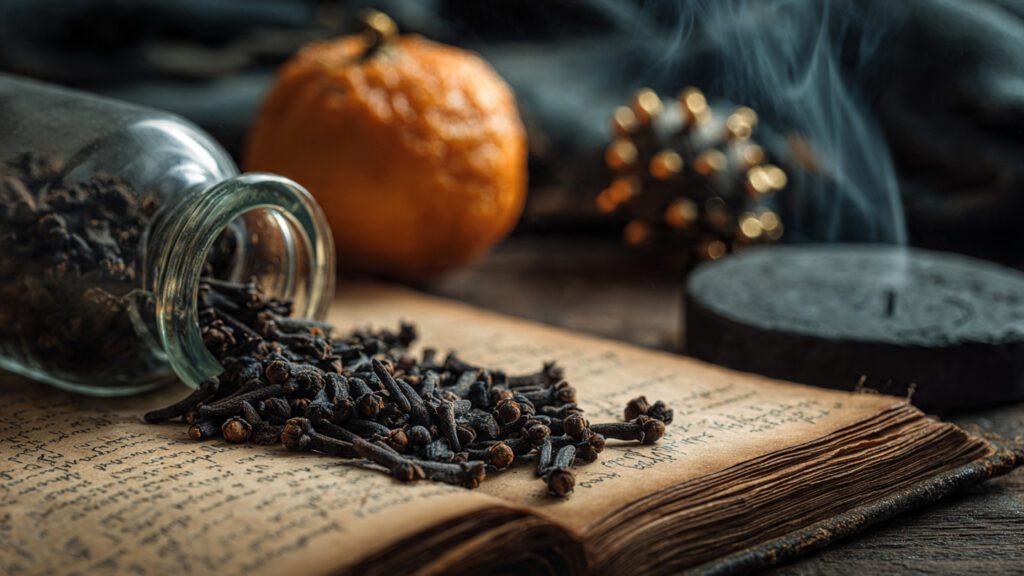
Cloves carry one of the most concentrated protective energies among common kitchen spices and are used in Hoodoo, European folk magic, and several Asian traditions for protection, banishing, and stopping gossip or harmful speech directed at you. Stick whole cloves into an orange and hang it in the home for long-lasting protective work, add ground cloves to sachets and floor washes, or burn whole cloves on charcoal when the problem is specifically unwanted attention or harmful words. They also appear in prosperity and love work, making them one of the more versatile spices in this list.
Cayenne Pepper
Cayenne is a “hot” herb in Hoodoo tradition, meaning it accelerates whatever it is combined with and adds force to banishing and driving-away work. Add a small amount to black salt for an aggressive protective mix, sprinkle across a threshold to prevent harmful people from returning, or add it to floor washes when a space needs decisive clearing. Use it sparingly in combination rather than as the primary ingredient, as its energy tends to dominate.

Fennel
Fennel was hung above doors in medieval Europe specifically against witchcraft directed at the household and appears in multiple traditional formulas for purifying a space after illness or conflict. Grow it in the garden for property protection, add seeds to sachets for personal work, or use the fronds in floor washes for cleansing.
Black Pepper
Black pepper’s function is aggressive protection and banishment, removing what is already present rather than preventing entry, which makes it complementary to rosemary and garlic rather than redundant. Sprinkle it at thresholds, add it to black salt, and use it in floor washes when a space has accumulated hostile energy. Several Mediterranean and Hoodoo traditions document its use against the evil eye and for breaking hexes.
Dill
Dill has a quieter protective reputation but a long one, documented in medieval European folk magic specifically against witchcraft directed at the home. In several Slavic traditions it is used against envy in particular, making it useful when jealousy from others is an active concern. Hang dried dill over the entrance, grow it in the garden, or add it to sachets placed in rooms where children sleep.
Purification and Cleansing Herbs
Sage
Culinary sage carries the same purifying reputation as white sage and has the advantage of being more sustainably available. The Latin name Salvia derives from salvare, to save or heal, which points at the plant’s core purpose: sage clears accumulated stagnant energy, emotional residue, and the psychic weight of conflict and grief.
Burn dried culinary sage in any space that needs clearing, add it to floor washes and bath water, or brew a strong sage tea to wipe down surfaces in a room that has held sickness or prolonged difficulty. Unlike rosemary, which is active and energizing, sage is deeply quieting and settles what has been agitated.
Sage also strengthens wisdom and aids decision-making. Keeping fresh sage growing in the kitchen or drinking sage tea before an important conversation is a folk practice for clarity of mind.
Lavender
Lavender purifies and calms simultaneously, with documented use spanning European folk magic, Mediterranean traditions, and various healing practices across centuries. Add it to floor washes and baths for purification with a calming quality, place dried lavender in rooms where sleep is difficult or anxiety accumulates, and burn it to clear a space before any practice requiring a quiet mind.
Lavender also functions powerfully in love and peace work. Add it to sachets placed under pillows to promote harmonious dreams, use it in baths for emotional healing, and place it in areas of the home where conflict has been chronic.
Chamomile
Chamomile is one of the most gentle and effective cleansing herbs available, and one of the most underused in practice. Add a strong chamomile tea to floor wash water to lift stagnant energy and bring in calm, use it in baths to release accumulated stress, or burn it in a space where tension has become persistent.
In prosperity work, chamomile is used to draw money gradually and steadily rather than in dramatic shifts. Washing the threshold of a business with chamomile water is a documented practice for attracting customers in a warm and sustainable way. Adding chamomile to sachets for luck and financial matters has a long history in European folk tradition.

Parsley
Parsley was associated with purification in ancient Greek tradition and functions as an energetic neutralizer, resetting the state of a space without adding strong directional energy of its own. Add it to baths, use it in floor washes, or burn it in a space you want to clear gently before bringing in a more specific intention. In several folk traditions it is used specifically when fear or anxiety has taken hold of a space or person.

Lemon
Squeeze lemon juice into floor wash water, simmer the peel on the stove to shift the energy of a home quickly, or add dried peel to sachets for purification. Rubbing a halved lemon over hands and forearms before entering a space where you need to be clear-headed is a simple folk practice documented across several traditions. Lemon also strengthens friendship and warmth, making it useful in cooking for gatherings where you want the atmosphere to be easy and open.
Prosperity and Abundance Herbs
Basil
Basil has been called the witch’s herb in Italian folk tradition and its consistent reputation across Mediterranean, African, and Asian traditions is remarkable. In Hoodoo, washing the threshold of a business with basil water, keeping fresh basil near the register, and carrying dried leaves in a wallet are all documented money-drawing practices. Grow it in the kitchen if you can, add it to prosperity floor washes, and cook with it intentionally for gatherings where you want people to feel generous.
Cinnamon
Cinnamon is a fire herb that speeds up results and increases the power of other herbs combined with it, with a consistent role in prosperity magic across cultures that reflects its historical value as a luxury trade good. Sprinkle it at the entrance to your home or business, add it to sachets for money drawing, burn a cinnamon stick to send a petition quickly, or combine it with sugar near the entrance of a business to draw customers.

Nutmeg
Nutmeg is used across European and American folk traditions for luck, financial improvement, and fidelity. Carry a whole nutmeg for general luck and financial protection, add ground nutmeg to prosperity sachets, or sleep with one under the pillow during financial difficulty as a practice for turning the situation. Nutmeg also appears in love and fidelity work, where it is used to maintain commitment in long-term relationships.

Allspice
Allspice is used across Caribbean and American folk magic for money, healing, and general good fortune. Its name is accurate in the magical sense as well as the culinary one, it carries the properties of several herbs simultaneously. Add it to sachets for prosperity, burn it for healing work, and use it in cooking with intention when the occasion calls for abundance and warmth.

Ginger
Ginger provides momentum. It shares cinnamon’s fire energy but has a more grounding character that actively pushes toward the goal rather than simply attracting. Add ginger to sachets to add force, eat fresh ginger before situations requiring confidence and decisive action, or brew ginger tea when forward movement on something stalled is needed.
Bay Leaf
Bay laurel is Apollo’s sacred plant, the herb of victory and prophetic vision in ancient Greece and Rome, and its magical properties reflect this: it is used for wishes, success, and clear sight. The practice of writing a wish on a bay leaf and burning it is documented from ancient Roman practice through contemporary folk magic and is one of the most widely preserved and widely used methods in this entire tradition. Place bay leaves under pillows for prophetic dreams, keep them in the pantry for household protection and good fortune, and add them to sachets for success.

Love, Peace, and Emotional Healing Herbs
Rose
Rose is one of the most complete love herbs available, documented across virtually every culture that has access to it, and both petals and hips are usable. Add rose petals to baths for self-love and emotional healing, to sachets for drawing romantic connection, or to candle work focused on love and beauty. Rose is also specifically protective in emotional contexts, used in several traditions against heartbreak, emotional manipulation, and the damage of badly ended relationships.
The thorns specifically carry protective energy in several folk traditions. Handle them carefully but do not discard them, small sachets containing thorns are used for sharp-edged protection against people who wish you harm.

Marjoram
Marjoram is the herb of happiness and domestic peace in multiple European folk traditions, sacred to Aphrodite in ancient Greece. Place dried marjoram in the bedroom to promote peace between partners, add it to cooking when household tension has been high, and use it in baths to attract warm and stable love rather than dramatic and volatile connection.

Oregano
Oregano was worn as wreaths in handfasting ceremonies in ancient Greece and appears consistently in love and happiness work across Mediterranean traditions. Add it to sachets for drawing joy, use it in cooking with the intention of bringing warmth to whoever eats it, and employ it in protective work specifically against sorrow or depression that feels like it is coming from outside rather than arising from within.

Mint
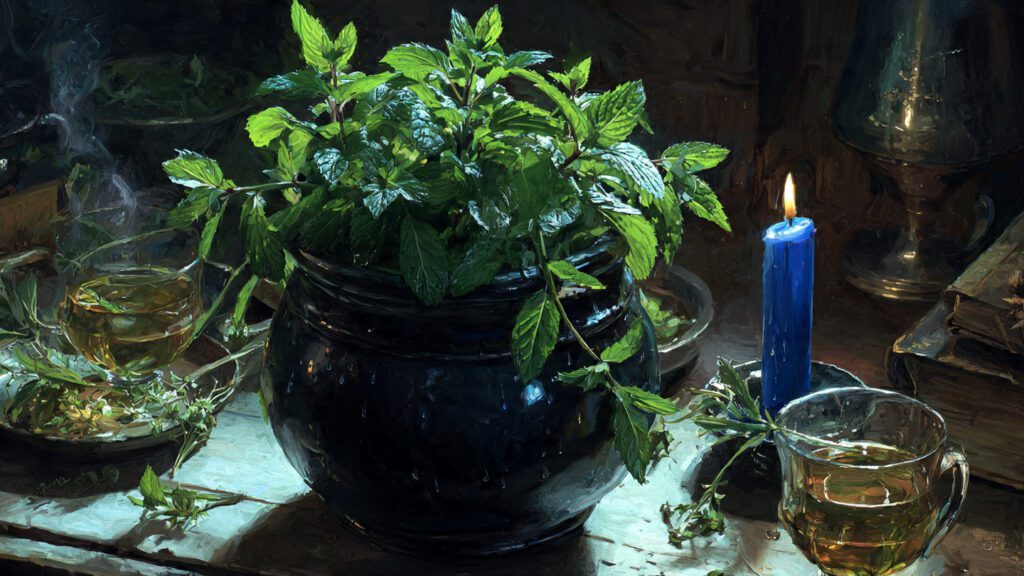
Mint clears the air between people and opens channels of honest communication, making it particularly valuable when a relationship has hit a period of difficulty or misunderstanding. Use it in teas served before difficult conversations, add it to floor washes where communication has broken down, and keep it growing in the kitchen to foster good energy between people who share the space. Mint also draws prosperity and supports travel and mental focus.
Vanilla
Vanilla fosters warmth, sweetness, and affectionate connection. Place a vanilla bean in a sugar jar to sweeten communications and relationships generally. Add it to warm drinks served to people you want to be warm toward you, and use it in cooking for occasions meant to foster intimacy, family warmth, or the repair of strained bonds.

Lavender
Lavender appears here as well as in the purification section because it works in both directions: it purifies and it soothes, making it useful in love work that involves healing rather than simply attracting. Use it in baths for emotional self-care, in sachets under pillows for peaceful sleep and harmonious dreams, and in any space where a calm, warm atmosphere is the goal.

Clarity, Courage, and Mental Strength Herbs
Thyme
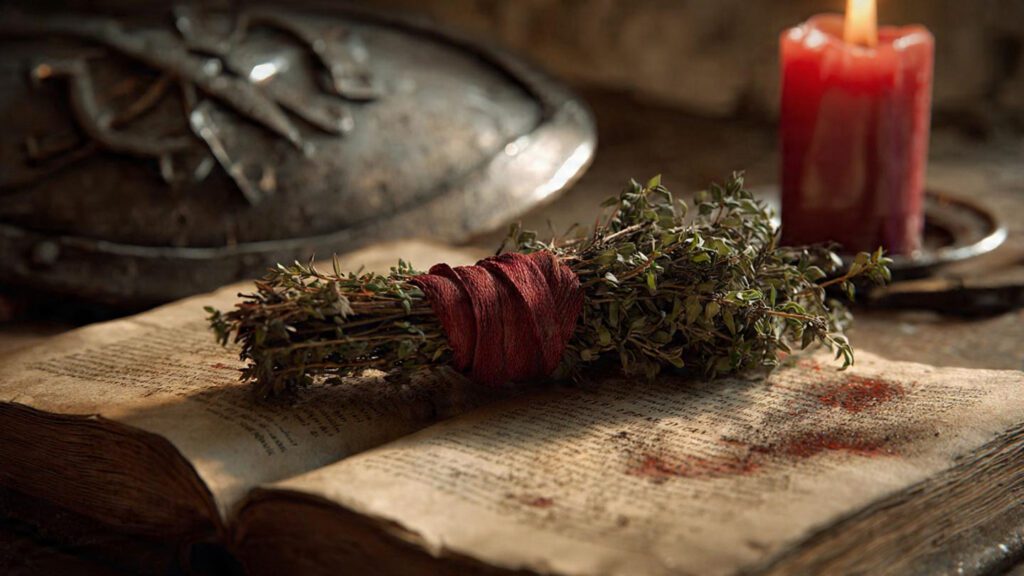
Thyme is the herb of courage in multiple European folk traditions, burned before battle by ancient Greeks and worn by medieval knights. Add it to baths when you need to summon courage to act on something delayed, burn it in a workspace where decisions need to be made, and place small sachets under pillows for sleep protection.
Rosemary (continued role)
Rosemary’s memory and focus functions deserve separate mention: ancient Greek scholars wore it during study, and its sharpening quality is real and consistent across traditions. Use it at your desk, in study spaces, or before any work requiring sustained concentration and clear thinking.
Sage (continued role)
Sage strengthens wisdom specifically in decision-making contexts. Drinking sage tea before an important conversation or difficult choice is a folk practice for accessing clearer judgment.
How to Use Kitchen Herbs in Practice
Burning
Dried herbs can be burned on a charcoal disc, on a fireproof dish, or bundled and burned as smoke cleansing. Different herbs produce different quality smoke: rosemary is sharp and clearing, sage is slower and more penetrating, lavender is gentle and calming, thyme is lighter and more medicinal. For a room clearing, walk the smoke counterclockwise through the space to remove, then optionally clockwise to seal and draw in a new quality.
Bath and Floor Wash
Steep a strong tea from the dried herb and add it to bathwater or floor wash water, soaking at least fifteen minutes for personal work. For home work, mop from the back of the house toward the front door to drive out, or from the front door inward to draw in. A handful of dried herb per two cups of water steeped for fifteen minutes makes an effective infusion.
Cooking With Intention
Add the herb to food while holding a specific intention, and stir clockwise to draw something in or counterclockwise to push something away. This is the most integrated form of this practice, it feeds people literally and energetically simultaneously, requires no separate ritual setup, and is invisible to anyone who does not already understand what you are doing.
Sachets and Pouches
Combine two or three dried herbs that share a purpose, place them in a cloth pouch, and carry it or situate it in a specific location. A pinch to a tablespoon per herb is sufficient, these work through proximity and scent, not volume. Replace when the herbs lose their scent, as this generally signals they have done their work or exhausted their charge.
Combining Herbs
Herbs with the same function amplify each other: rosemary, garlic, and cloves together create a stronger protection compound than any one alone, basil, cinnamon, and bay leaf make a focused prosperity blend, and sage and lavender combined produce a gentler, more deeply calming purification than sage alone.
Avoid combining herbs with opposing purposes in the same sachet or floor wash. Driving-away herbs (black pepper, cayenne, garlic) and drawing-in herbs (basil, cinnamon, mint) cancel each other’s direction. Use them in sequence rather than simultaneously, clear first, then draw in.
Growing
A living herb plant carries continuous active energy, and tending it maintains the relationship. Rosemary near the entrance is a living protective presence, basil on the windowsill works continuously for prosperity, and lavender growing in the home brings both calm and subtle purification. The act of watering and caring for the plant is itself a form of ongoing engagement with its properties.
Quick Reference
| Herb | Primary Function | Secondary Uses |
|---|---|---|
| Rosemary | Protection, purification | Memory, mental clarity, fidelity |
| Garlic | Aggressive protection, banishment | Health, strength, warding evil eye |
| Cloves | Protection, stopping harmful speech | Prosperity, love |
| Cayenne | Banishment, speed | Amplifying other herbs |
| Fennel | Protection, purification | Healing |
| Black pepper | Banishment, breaking hexes | Driving away jealousy |
| Dill | Protection against envy | Money, love |
| Sage | Purification, wisdom | Cleansing grief and stagnation |
| Lavender | Purification, peace | Love, emotional healing, sleep |
| Chamomile | Cleansing, calm | Steady prosperity, luck |
| Parsley | Purification, neutralizing | Fear and anxiety |
| Lemon | Cleansing, friendship | Uplifting stagnant energy |
| Basil | Prosperity, love | Protection |
| Cinnamon | Speed, money, acceleration | Strengthening other herbs |
| Nutmeg | Luck, prosperity | Fidelity, financial protection |
| Allspice | Money, good fortune | Healing |
| Ginger | Power, momentum | Love, success |
| Bay leaf | Wishes, victory | Prophetic dreams, protection |
| Rose | Love, emotional healing | Protection, divination |
| Marjoram | Domestic peace, happiness | Love, emotional healing |
| Oregano | Joy, love | Protection against sorrow |
| Mint | Communication, clearing air | Prosperity, travel |
| Vanilla | Warmth, sweetness | Domestic peace, love |
| Thyme | Courage, healing | Sleep protection |
FAQ
Rosemary is the most complete protective herb in the standard kitchen, with documented use from ancient Rome through contemporary Southern European folk tradition, and functions by hanging above the entrance, burning in affected rooms, or adding to baths. Garlic, black pepper, cloves, and dill all carry protective properties across multiple independent traditions, with garlic specifically suited to driving out what is already present and rosemary better suited to maintaining a barrier.
Burning culinary sage clears accumulated stagnant energy, emotional residue, and the psychic weight of conflict and grief, with the Latin name Salvia derived from salvare, meaning to save or heal, pointing directly at its core function. Unlike rosemary, which is active and energizing, sage is deeply quieting, settling what has been agitated rather than fortifying what is already stable.
Bay laurel is Apollo’s sacred herb in ancient Greek and Roman tradition, used for wishes, success, and prophetic vision, with the practice of writing an intention on a dry bay leaf and burning it documented from ancient Rome through contemporary folk magic. Placing bay leaves under a pillow draws prophetic dreams, keeping them in the pantry provides household protection, and adding them to sachets supports success in specific undertakings.
Basil is the most consistently documented money-drawing herb across Mediterranean, African, and Hoodoo traditions, with threshold washing, keeping fresh basil near a cash register, and carrying dried leaves in a wallet all recorded practices. Cinnamon accelerates results and strengthens other herbs combined with it, chamomile draws steady gradual financial improvement, and ginger adds forward momentum when a situation has stalled.
Rose is the most complete love herb available, used for drawing romantic connection, self-love, and emotional healing after loss, with both petals and thorns carrying specific functions across virtually every culture that has access to the plant. Lavender promotes calm and harmonious connection, marjoram is the herb of domestic peace in multiple European folk traditions, and mint clears the air between people and opens channels of honest communication when a relationship has hit difficulty.
The four main methods are burning dried herbs as smoke to clear or protect a space, steeping a strong herbal tea and adding it to floor wash water or bathwater, adding herbs to cooking while holding a specific intention, and combining two or three dried herbs in a cloth sachet to carry or place in a specific location. Herbs with the same function amplify each other in combination, while driving-away herbs like black pepper and cayenne and drawing-in herbs like basil and cinnamon cancel each other’s direction and should be used in sequence rather than together.