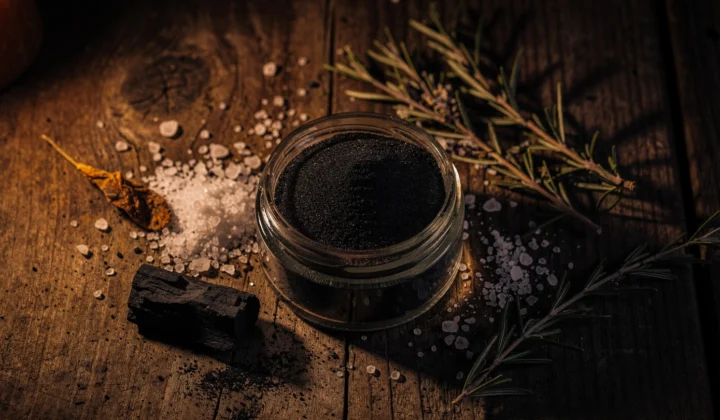
I made my first serious batch of black salt during a period when something had settled into the house that I could not shift, and I treated the ash component as an afterthought, something to darken the mixture and add a general sense of protection. The batch used incense ash from whatever I had on hand, ground in with salt and charcoal, and it did what a general-purpose compound does, which was not quite what the situation called for.
What I had not figured out yet is that the ash source is what orients the finished compound, not just how dark it looks or how potent it feels. Two batches made with the same salt and charcoal but different ash are built for different jobs, and that distinction took me an embarrassingly long time to actually understand.
What Black Salt Actually Is
Black salt is regular salt darkened with charcoal, ash, or both, and optionally strengthened with protective herbs ground into the mixture. It appears in Hoodoo, where it is sometimes called Drive Away Salt or Witches Salt; in European folk magic; and in protection traditions throughout the African diaspora. The specific formula varies by tradition, but the underlying logic is consistent across all of them: salt as purifier and boundary-marker, combined with something that absorbs or repels what you want gone.
It is not the same as culinary black salt. Indian kala namak is a volcanic mineral salt with a sulfuric flavor used in cooking, and Hawaiian black lava salt is sea salt infused with activated charcoal for the same purpose. Both are food products with no relationship to the ritual compound beyond color, and ritual black salt is not for consumption.
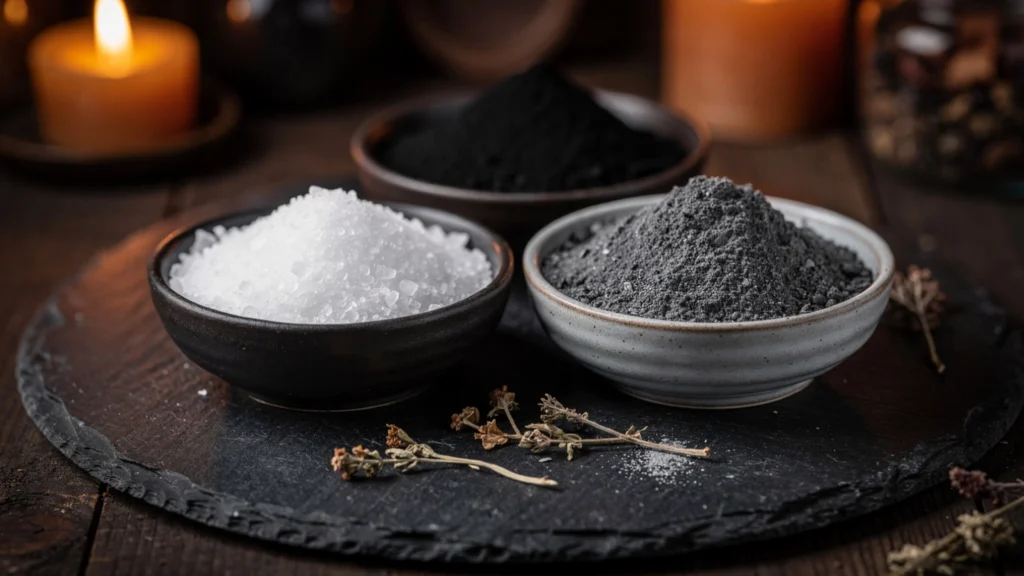
Why Each Ingredient Does What It Does
Salt
Salt has been used for preservation, purification, and protection across virtually every culture that has access to it. Its physical property of drawing moisture out through osmosis maps directly onto its spiritual reputation for drawing out and neutralizing corruption, which is one of those correspondences that feels less symbolic and more literal the longer you work with it. In nearly all folk magic traditions, salt creates boundaries, marking the line between inside and outside, protected and unprotected. The difference is that where plain salt repels, black salt absorbs, which matters most when what you are dealing with has already found a way in.
Charcoal
Activated or crushed charcoal is the absorbing component. In poison treatment and water filtration it physically draws in and holds toxins, and in magical work it operates on the same principle, pulling in negative energy, hostile intention, and whatever else you are trying to remove. It does not transform what it absorbs but simply holds it. This is why disposal matters as much as application: the charcoal captures rather than neutralizes, which means a used batch is carrying what you pulled out of your space.
Ash: Why the Source Is the Variable That Matters
Ash is the residue of fire, and fire transforms. Whatever was burned carried specific properties in life, and the ash retains a concentrated version of those properties plus the transformation quality of having passed through fire.
Ash from burned incense is practical and works for general use. Ash from burned rosemary carries rosemary’s protective qualities in concentrated form, suited to ongoing home maintenance. Ash from dragon’s blood resin carries its reputation for reversal, sending energy back toward its source rather than simply absorbing it. Ash from burned black pepper or cayenne creates a more aggressive, driving-away character suited to banishing work rather than quiet barrier-keeping.
I started paying close attention to this after noticing that batches made for different situations felt different to work with, and the variable was almost always the ash. For general home maintenance, frankincense or rosemary ash is the right choice. For something that needs to be actively driven out rather than absorbed, pepper or cayenne ash changes the direction entirely.
Herbs and Other Additions
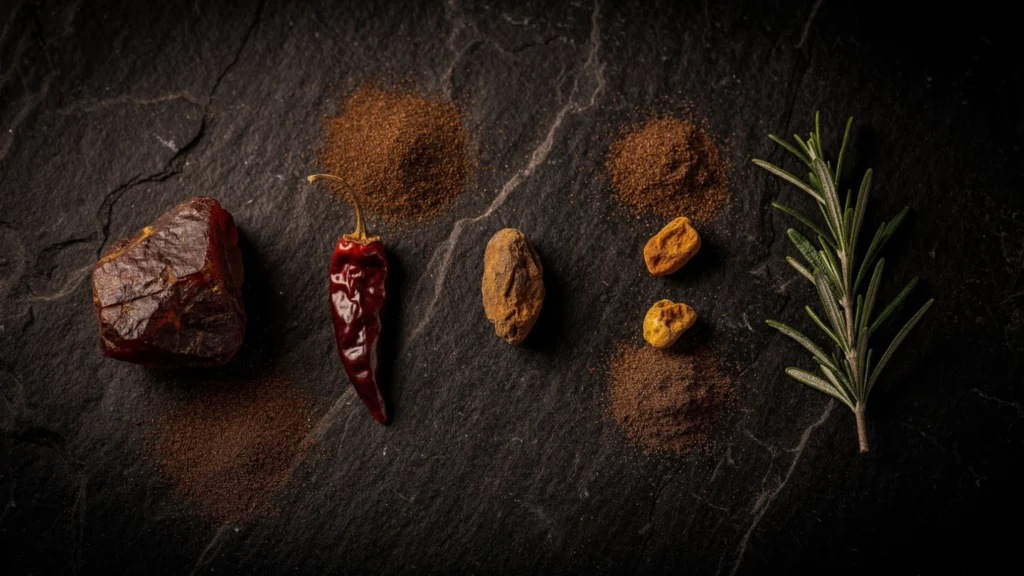
Ground dried herbs incorporate their specific energetic properties through contact during grinding. The most commonly used are black pepper for aggressive protection and driving away, rosemary for general protection and clarity, and rue, which has a long folk magic history particularly suited to reversing and breaking negative influences. Catherine Yronwode’s documentation of Hoodoo practice confirms rue and black pepper as standard protective additions across Southern American folk magic.
Iron filings are a traditional addition from several folk magic lineages. Iron has a long reputation as hostile to malevolent spirits and harmful magic, and a small amount ground into the mixture adds repelling force. A pinch is sufficient.
Eggshells
A shell spent its entire existence doing one thing, which is keeping something alive by holding a boundary between inside and outside, and that function maps directly onto why it belongs in a protective compound. You are not reaching for a metaphor here. The material has a literal history of doing exactly what you are asking it to do.
The powdered form of eggshell is called cascarilla, and it is a standard ingredient in Santería and Lucumí practice, where it appears consistently in cleansing, protection, and boundary work. Catherine Yronwode’s documentation of Hoodoo practice also references powdered shell as a protective agent, which suggests the logic crosses traditions that did not develop in contact with each other, and that pattern is usually worth paying attention to.
Where charcoal absorbs what enters and ash provides directional force, eggshell works on the boundary itself, reinforcing the wall rather than managing what gets through it. Adding all three means you are covering different parts of the same job rather than doubling up on one.
A tablespoon of cascarilla to a cup of salt is a reasonable starting point.
How to Prepare Eggshells
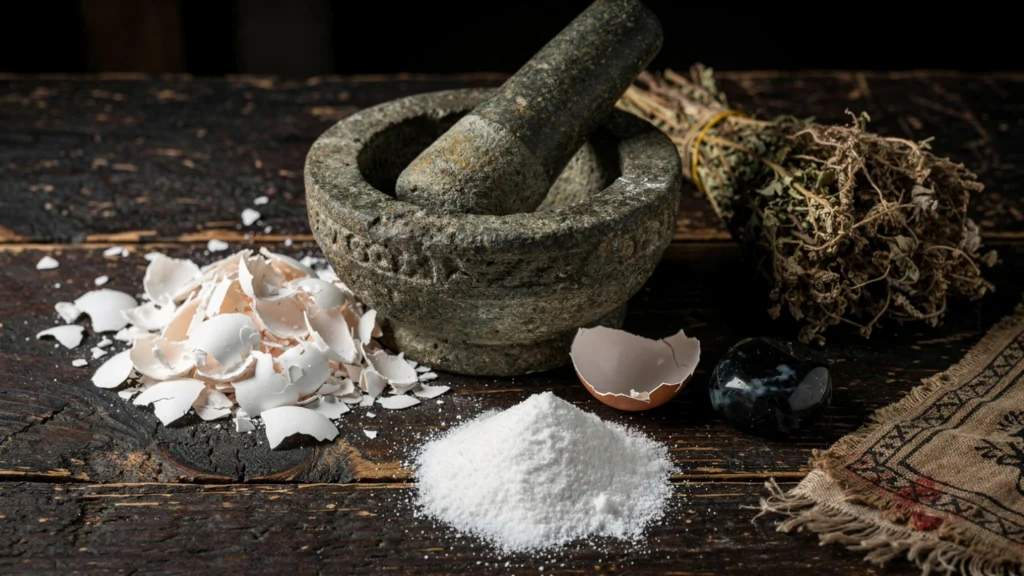
Wash the shells and remove the thin white membrane from the inside before anything else, because it is organic material that will affect both texture and shelf life if it stays in. Once the shells are fully dry, crush them in the mortar first, before any other ingredient goes in, and grind until the powder is genuinely fine with no sharp fragments left. Eggshell resists grinding if you rush it, and coarse fragments will sit unevenly through the batch rather than distributing properly.
When to Make It
The waning moon carries stronger banishing energy because the waning phase is associated with removal and reduction. The dark moon, the three days before the new moon when the sky is completely dark, is considered the most potent window for work involving driving out or protecting against serious threats.
Any time works for a basic maintenance batch. But for a difficult ongoing situation, a property with accumulated bad history, or a problem that has persisted despite other work, making the batch during the waning or dark moon adds alignment that is worth the small inconvenience of timing.
Recipes for Different Purposes
Three batches worth knowing, each built around a different intention. The ingredients are not interchangeable because the ash source, as covered in the ingredients section, is what determines what the finished compound is actually oriented toward.
Basic Protective Black Salt
This is the batch worth keeping in the jar at all times, suited to home protection, threshold lines, and general maintenance work where the goal is holding a boundary rather than actively driving anything out.
Ingredients:
- Sea salt or rock salt as the base
- Crushed charcoal
- Ash from incense or a clean fire
- Dried rosemary or black pepper, ground in (optional)
- Cascarilla (powdered eggshell), ground separately first (optional)
Rosemary has a long documented history in protective work across European and Balkan folk traditions, which is why it shows up here as the default herb addition rather than something more aggressive. Cascarilla adds boundary reinforcement without shifting the character of the batch toward banishing, so it sits comfortably in a maintenance formula where you want steady protection rather than expulsion.
Strong Banishing Black Salt
For situations where general protection has not resolved the problem, meaning something is active and persistent rather than ambient and low-level.
Ingredients:
- Sea salt
- Crushed charcoal
- Ash from burned black pepper or cayenne
- Ground black pepper
- Ash from burned rue (optional)
The distinction between this batch and the basic recipe is the ash source. Catherine Yronwode’s documentation of Hoodoo practice identifies black pepper and rue as standard banishing additions across Southern American folk magic, and both appear here for the same reason: black pepper moves things out aggressively, and rue has a specific reputation for breaking and reversing negative influences that have already established themselves. This batch is directional in a way the basic recipe is not, so the intention when grinding needs to reflect that.
Reversal Black Salt
When negative energy has been directed at you deliberately, and the goal is return to source rather than containment or expulsion.
Ingredients:
- Sea salt
- Crushed charcoal
- Ash from burned dragon’s blood resin or rue
- A small amount of ground mirror or other reflective material, handled carefully (optional)
Dragon’s blood resin has been documented in protective and reversal work across ancient Greek, Indian, and Middle Eastern traditions, and Catherine Yronwode at Lucky Mojo confirms its use in Hoodoo for cleansing and reversing harmful energy back toward its origin. The reflective material, if you choose to include it, reinforces that directional logic physically, though I would note that grinding mirror fragments requires care and a dedicated mortar you do not use for anything else afterward. The intention here is specific: not absorbing what came at you, and not simply pushing it away, but sending it back where it came from.
How to Make It
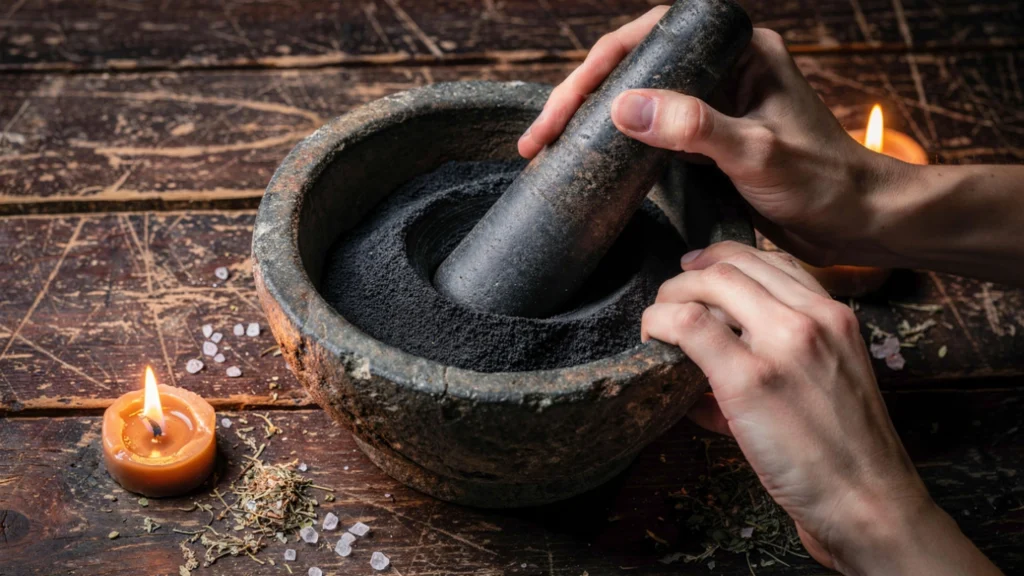
A mortar and pestle is the right tool for this, and not just because it is traditional. The grinding keeps your hands in direct contact with the material the entire time, which matters because the intentional work happens during the making, not before or after it. If you only have a bowl and spoon, that works fine, but grind each dry ingredient separately before combining them.
Step 1: Grind the eggshells first If you are using cascarilla, it goes in before anything else. Grind the dried eggshells on their own until you have a fine, smooth powder with no sharp fragments left. Eggshell resists grinding if you rush it, so take your time here before adding anything else to the mortar.
Step 2: Add the salt Sea salt or rock salt both work. Add it on top of the cascarilla and grind briefly to begin combining the two.
Step 3: Add the charcoal and ash Add your charcoal and ash on top. If you pre-ground the charcoal separately, it will incorporate much more easily at this stage.
Step 4: Add herbs last If you are using any herbs, black pepper, rosemary, rue, whatever the recipe calls for, they go in last.
Step 5: Grind until the color is completely even Use slow circular motion with real pressure and keep going until there are no light patches left, because a patchy mix is not just an aesthetic problem. Uneven distribution means the batch will behave unevenly in use.
Step 6: Set your intention While your hands are still in it, say clearly what this batch is for. Not a ritual speech, just one clear statement. The intention goes in during the making because that is when the material is still becoming something.
Step 7: Store it properly Transfer to a sealed glass jar and keep it somewhere cool and away from light. If it clumps significantly over time, moisture has gotten in and the batch needs to be remade rather than used.
How to Use It
Threshold and Boundary Protection
A line of black salt across doorways and windowsills prevents negative energy, hostile intent, or unwanted entities from crossing into your space. For a front door, the line goes outside the threshold on the ground. For apartments, a line across the interior threshold or a small amount under the doormat works.
For full property protection, sprinkle at all four corners of the property or interior. Walk counterclockwise when laying the line. This direction, called widdershins in Western folk magic traditions, is associated with banishing and removal.
Renew the lines monthly, or after anything that feels like it has tested the boundary. When you sweep up old salt, dispose of it off your property.
Absorbing Work
A small amount in a cloth bag or sealed container placed in areas where negativity accumulates does passive work over time: under a desk at work, in a corner of a room that feels heavy, in a car that has carried difficult situations. I keep a small sealed container under my desk and replace it every new moon. Replace the salt approximately monthly, or when you sense it has reached capacity, and dispose of the used batch off your property.
Footsteps
Sprinkling black salt in the footsteps or path of someone you want to prevent from returning is a documented Hoodoo use. As the person leaves, a small amount scattered where they walked carries the intent for them not to come back. This is a banishing act directed at a specific person’s return, not at the person themselves.
With Candle Work
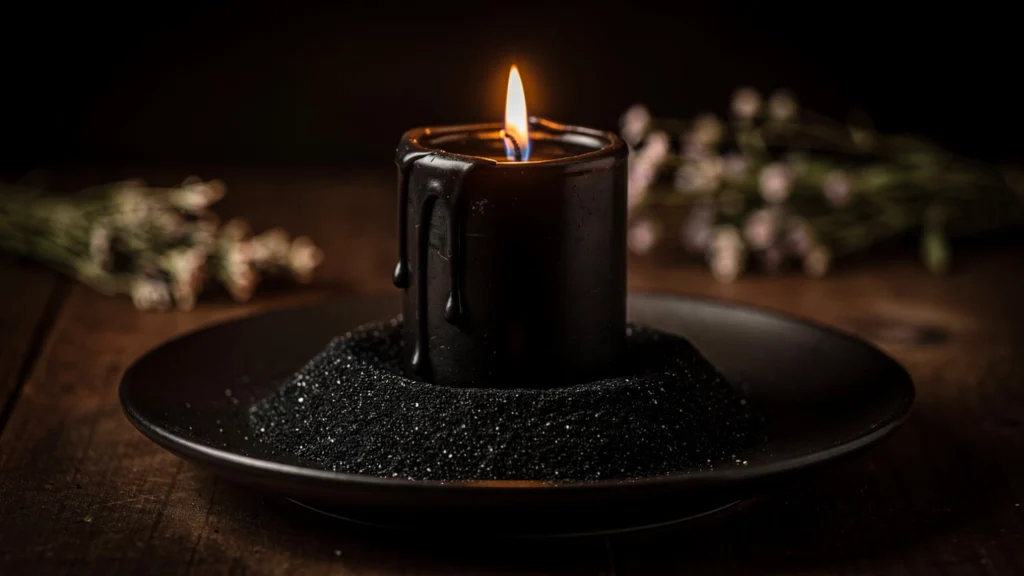
Roll a dressed black candle in black salt before lighting it for protection or banishing work. The salt creates an additional absorbing layer around the candle’s work. Use black or dark-colored candles for this.
Floor Washes
Add a small pinch to floor wash water when cleansing a space, and always mop toward the door so that what you are clearing exits through the opening rather than being pushed further in. Too much will discolor light floors.
Banishing Specific Situations
Write what you want removed on paper, and place the paper in a dish and cover it with black salt. Leave for three days, then take the salt and paper off your property to a crossroads or running water and dispose of them together.
In Baths
A small amount added to a bath works for personal cleansing when you feel like you have absorbed too much from other people or difficult situations. Air dry after rather than toweling off, and pour any remaining bath water toward a drain that exits the building.
Charging Under Moonlight
Leaving finished salt on a windowsill under the waning or dark moon for one night strengthens its banishing character. Full moon charging shifts the energy more toward general cleansing than aggressive banishing, which is a distinction worth keeping in mind if you are making a batch for a specific purpose.

Disposing of Used Black Salt
Salt that has been absorbing negative energy carries that energy within it. Disposing of it inside your home, in your indoor trash, or in your garden reintroduces what you were trying to remove. The charcoal component holds what it absorbed. Moving the batch off your property moves what it captured away from you.
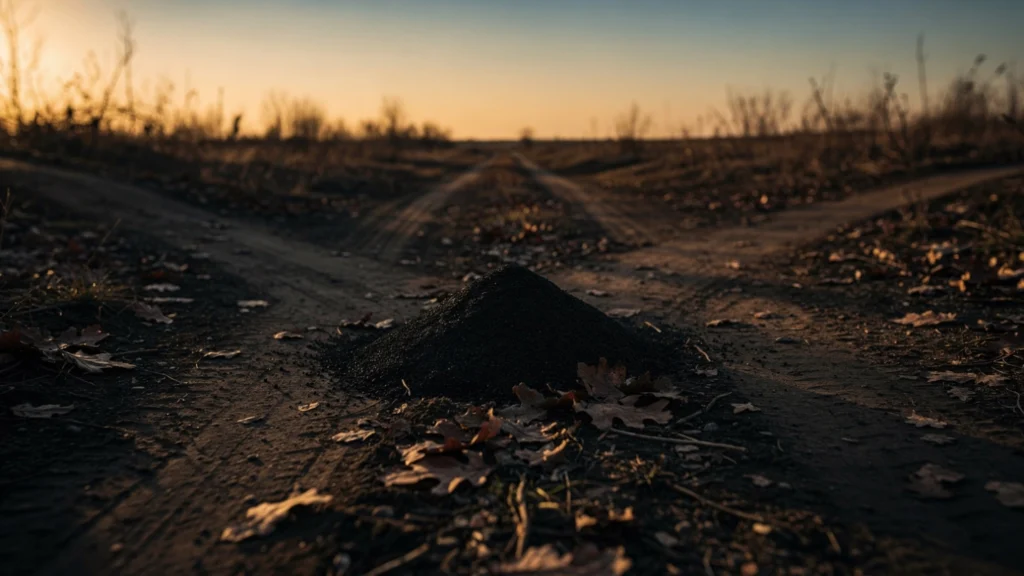
Used black salt should be taken off your property entirely. Traditional disposal methods are scattering it at a crossroads, documented in both Hoodoo practice and broader European folk magic as a place of transition and release, pouring it into running water that carries it away, or burying it in earth far from your home and any place you spend regular time. The method matters less than the intention of releasing what the salt is carrying as far from yourself as possible.
The same logic applies to salt used in baths, floor washes, and absorbing bags. It is not superstition but the natural conclusion of taking the compound’s absorbing properties seriously.
What Black Salt Is Not For
Black salt is oriented toward driving out, absorbing, and creating barriers, which means using it for attraction work or love spells works directly against what the compound is built for. White salt or pink salt handles attraction work better because the underlying logic points in the opposite direction. Mixing the two categories tends to produce nothing from either.
FAQ
Black salt is a protective compound used in Hoodoo, European folk magic, and African diaspora traditions for creating barriers, banishing hostile energy, and driving out what has already settled into a space or person. Unlike plain sea salt, which purifies and holds boundaries, black salt actively absorbs and repels, making it the appropriate tool when something needs to be removed rather than simply kept out.
Indian kala namak and Hawaiian black lava salt are food products with no relationship to the ritual compound beyond color, and ritual black salt is not for consumption. Ritual black salt is sea salt combined with charcoal, protective herb ash, and optionally cascarilla, assembled with specific intention for protective and banishing work.
The ash source determines what the finished batch is oriented toward, which is the variable most recipes skip. Rosemary or frankincense ash suits general home maintenance and ongoing protection, black pepper or cayenne ash creates a more aggressive driving-away character suited to banishing, and dragon’s blood resin ash, documented in protective and reversal work across ancient Greek, Indian, and Middle Eastern traditions, orients the batch toward returning directed energy back to its source.
A line of black salt laid across the outside of doorways and windowsills prevents hostile energy and unwanted influences from crossing the threshold, renewed monthly or after anything that tests the boundary. For full property protection, sprinkle at all four corners walking counterclockwise, which is the widdershins direction associated with banishing and removal in Western folk magic tradition.
The waning moon is the appropriate window for making black salt because the waning phase carries banishing and removal energy by tradition. The dark moon, the three days before the new moon when the sky is completely dark, is considered the most potent window for work involving driving out persistent or serious threats specifically.
Used black salt carries what the charcoal absorbed and should be taken off your property entirely rather than discarded in your indoor trash or garden. Scattering it at a crossroads, documented in both Hoodoo practice and European folk magic as a place of transition and release, pouring it into running water, or burying it in earth far from your home are the three standard disposal methods.