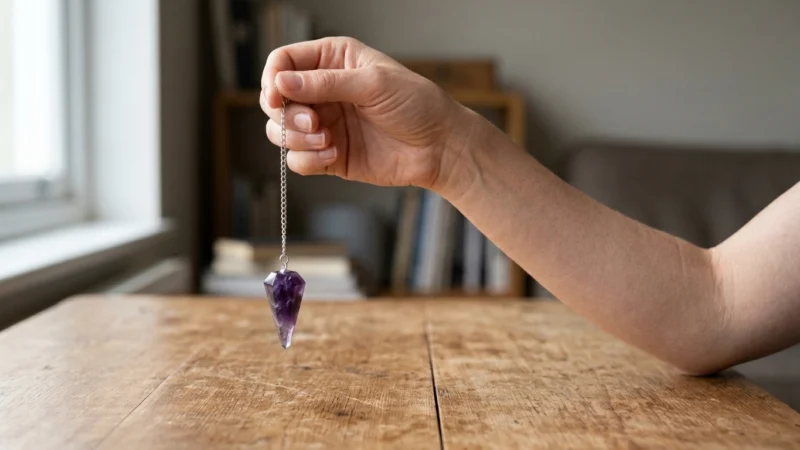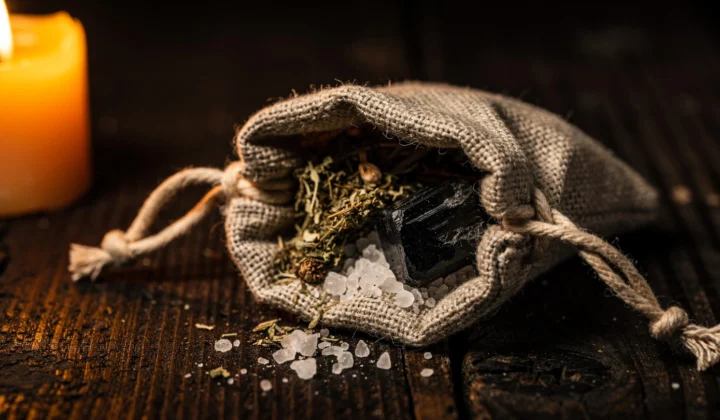
Three weeks after assembling your protection amulet, you are not certain it is doing anything. You charged it under the full moon, spoke the intention carefully, chose the right materials. The problem, if there is one, is almost never in the ritual. It is in what came after: whether you have carried the object on your body every single day since, or whether it has been sitting somewhere nearby waiting to be needed.
The balance of what goes into the pouch determines whether the object functions as a unit. Sea salt absorbs hostile energy inward until it saturates and needs replacing. Black pepper pushes hostile energy outward and does not saturate the same way. Building a pouch without understanding that difference produces an object where the components work at partial cross-purposes, and the assembled object never fully coheres into a single directed function.
Amulet or Talisman: What You Are Actually Making
An amulet draws its protective function from the inherent properties of its materials, which is why garlic appears in Greek, Roman, Celtic, Slavic, Norse, and Hebrew protective traditions without those cultures having contact with each other: the virtue is in the plant, not in any procedure performed over it. A talisman, by contrast, is manufactured for a specific purpose through a ritual process that invests an otherwise neutral object with directed power it did not previously have.
A protective pouch sits between these categories. The materials do the base protective work through their own properties, and the spoken intention added during assembly is the talisman element: the act that organizes those separate properties into a single directed function rather than leaving them operating independently of each other.
Each material is already doing something before you assemble it. Assembly adds coordination, and daily carrying adds specificity, building the object’s orientation toward you rather than toward whoever last handled it.

Why Making Your Own Matters
A protection amulet builds toward whoever maintains consistent physical contact with it, so an object you make yourself starts accumulating your specific charge from first contact onward. A bought object arrives carrying the energetic signatures of everyone who made, handled, packaged, and shipped it, and clearing those signatures before your own charge can establish itself takes time you would otherwise spend building protection.
A carried amulet also stays active over time rather than functioning as a one-time event. A ritual either works or it does not, and when it is finished the work stops, while a carried amulet builds continuously as long as it remains in daily contact with you.
An amulet left on an altar is not doing protective work for you: it is absorbing ambient room energy, and when you then carry it into a difficult situation, you are carrying a room-charged object, not a personally oriented one.
What Form to Make
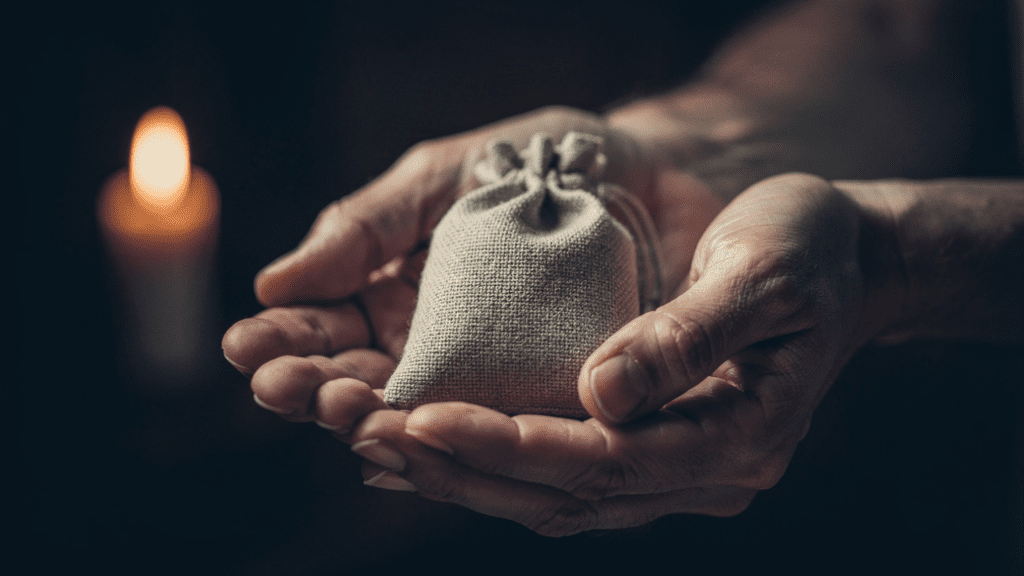
The soft cloth pouch builds charge fastest because more active material is absorbing and projecting simultaneously, and the contents can be adjusted when the protection problem changes.
The Soft Pouch
A small cloth bag filled with specific herbs, salt, and a stone is the most accessible form and requires nothing most households do not already contain. Natural fabric works better than synthetic because synthetic material creates a barrier between the contents and your field, slowing the charge-building process.
The Hard Object
A single stone, piece of iron, or seed carried directly on the body takes longer to charge than a pouch because there is less active material, but it lasts indefinitely with regular cleaning and is easier to carry without drawing attention.
The Worn Piece
Jewelry works as a protective carrier, but the charge that builds toward you disrupts every time someone else handles it. If you carry a piece as jewelry, careful management around other people is genuinely necessary, not optional.
Absorb or Deflect: The Question That Determines What You Build
Every material in a protection amulet either draws hostile energy inward and neutralizes it by taking it into itself, or pushes hostile energy outward before it reaches you. These are opposite mechanisms, and building without understanding which is which produces materials working at cross-purposes.
Sea salt and black tourmaline both work continuously and well, and both eventually reach saturation, at which point they stop absorbing and begin re-emitting what they have collected. Monthly replacement of the salt and weekly cleaning of the tourmaline is not optional maintenance: it is what keeps absorbing materials from reversing their function.
Deflecting materials do not saturate the same way, which makes them lower-maintenance but less suited to high-volume ambient accumulation without absorbing support alongside them. General environmental stress from crowded or high-conflict spaces calls for heavier absorbing material, while a specific person directing consistent hostile attention calls for more deflection.
If you are not certain which problem you have, build a balanced pouch and monitor whether the absorbing materials are saturating faster than expected.
Materials and What Each Actually Does
Each material here has a specific documented function that can be named before it goes into the pouch. The distinction between absorbing and deflecting runs through all of them.

Black Pepper
Black pepper corresponds to Mars and Fire in planetary terms, meaning its energetic signature is projective rather than receptive. In a pouch it pushes hostile energy away from the carrier rather than drawing it in, which makes it the right choice when the problem involves projection from a specific external source rather than general ambient accumulation. Mixed with salt it shifts the salt’s function from pure absorption toward a combined absorb-and-push action, which extends the working life of the salt between replacements.
Garlic
Garlic appears as specific protection against hostile energy and the evil eye in Greek, Roman, Celtic, Slavic, Norse, and Hebrew traditions, without those traditions having had contact with each other. When independent practices across that much geographic and temporal distance arrive at the same material for the same function, they are responding to something real in the plant, not inheriting a shared belief. A small dried piece carries the function.
Rosemary
Rosemary appears in classical and medieval protective sources in the same role consistently: a space-clearing and threshold-protection herb. Pliny the Elder documents it in his Natural History, and it appears in Italian, British, and Balkan folk practice with nearly identical function across all three. In a pouch its oils emit continuously without burning, making it persistently active rather than a single-use material.
Black Salt
Black salt is sea salt combined with ash from burned protective herbs and a small amount of activated charcoal, and the ash component shifts its function: where plain sea salt absorbs purely passively, black salt carries a mild deflective quality alongside its absorbing function. It is the better choice over plain salt when you can identify a specific source of what you are protecting against rather than dealing with general ambient accumulation.
Sea Salt
Sea salt absorbs passively, which means it works well and continuously and also fills up without visible sign. Monthly replacement is the minimum, and old salt should be discarded away from your property because it carries what it absorbed and accumulating it nearby defeats the purpose of replacing it.
Black Tourmaline
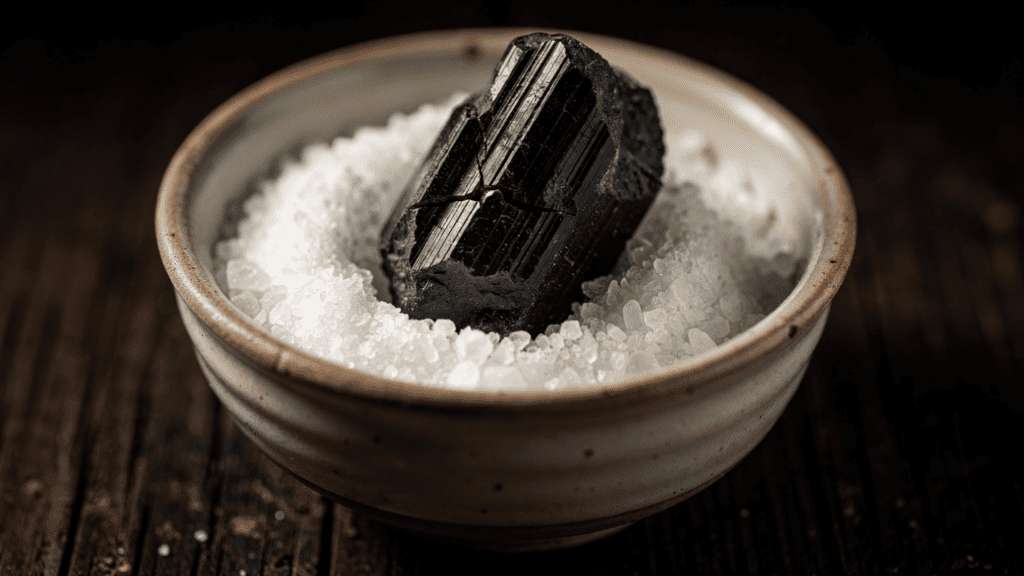
Black tourmaline absorbs hostile energy before it reaches the carrier’s field and needs weekly cleaning in dry sea salt because it saturates faster than any other material in the pouch. The traditional understanding that tourmaline sometimes cracks or chips when it has absorbed more than it can hold matches what I have observed directly. I have had two stones crack at times I can account for specifically, in circumstances that structural defect alone does not explain. If your stone cracks, replace it: its function is complete.
Iron
Iron appears in protective work across virtually every European folk tradition, from Roman to Germanic, Slavic, Scandinavian, and British practice, specifically because iron was understood as resistant to hostile magic and inhospitable to spirits with malicious intent. A small nail, an old iron key, or a piece of iron wire adds a quality no herb provides, and iron does not saturate, so it requires no replacement beyond occasional salt cleaning.

The Written Intention
Small folded papers carrying written protective phrases placed inside pouches appear in documented European practice from the thirteenth century onward, traced by Lecouteux across German, Italian, and French sources in The High Magic of Talismans and Amulets. Writing your specific protective intention on a small piece of paper and folding it into the assembled pouch adds a permanent organizational element, directing the materials continuously rather than only at the moment of spoken assembly.
Assembling the Pouch
Lay out all your materials before you begin and hold each one briefly before placing it in the pouch. Speak directly to each piece about what you are asking it to do, in plain words: “You repel what approaches with hostile intent,” or “You absorb what enters my field without my choosing it.” Spoken specificity is what gives the assembly directional function, because vague intention produces vague orientation.
Once everything is in the pouch including the written intention, close it and hold it in both hands. State what you are asking the completed amulet to do, for how long, and against what specifically. Name the protection problem if you can name it, because a precisely named instruction orients the materials more coherently than a general one.
Timing the Initial Charge
Assemble and charge during a waxing or full moon when you have the choice, because those conditions favor building and accumulation. Place the assembled pouch in direct moonlight for at least three hours.
For a more targeted initial charge, Mars governs active protection, the repelling of hostile forces, and defense against directed attack. The planetary hour of Mars falls on Tuesday during the first hour after sunrise, and performing the initial charging during that window aligns the amulet with the planetary correspondence most directly relevant to protection work. Combining moon timing with a Mars hour produces a stronger initial orientation than either does alone.
If you need the amulet immediately and cannot wait for favorable timing, assemble it now and recharge under the next available waxing or full moon.
Daily Carrying Is What Builds the Charge
The moon charge and the assembly ritual create the starting conditions. Daily carrying is what builds the actual protective function, because consistent physical contact with you specifically is what orientates the object toward you over time.
An amulet carried in a drawer for six months has built a charge responsive to the room it sits in rather than to the person who made it, so using it in a difficult situation means carrying a room-charged object rather than a personally oriented one, which accounts for most reports of amulets that seemed to work and then stopped.
Three months of daily carrying, meaning every day rather than most days, produces an object meaningfully different from what it was when first assembled, in the same way a well-used protective threshold differs from a freshly prepared one.
Signs Your Amulet Needs Cleaning or Replacement
A saturating pouch and a disrupted pouch present differently and require different responses.
What Saturation Feels Like
A saturating pouch starts to feel heavier or denser than it did when new. Situations the amulet would normally buffer are getting through more easily. If you are carrying tourmaline, check it for cracks or chips before checking anything else, because that is often the first sign saturation has been reached.
Cleaning the Stone
Leave the stone overnight in dry sea salt, rinse with cold water, and place it in direct sunlight for several hours before returning it to the pouch. The dry salt draws out accumulated charge and the sunlight resets the baseline before the next carrying period.
Replacing the Soft Materials
Replace the salt and dried herbs monthly and discard the old materials away from your property. When you reassemble, speak the intention fresh into the closed pouch rather than assuming the previous intention transfers automatically to new materials.
Keep It to Yourself
The protective charge builds specifically toward its carrier, and handling by others disrupts that specificity because the object begins orienting toward whoever is in sustained contact with it. Virtually every folk tradition that works seriously with personal protective objects arrives at the same instruction for this reason: the object belongs to the person who carries it, and the more hands it passes through, the more recovery work is needed to re-establish its directional function.
If your amulet is handled by someone else, hold it in both hands for several minutes and re-speak the original instruction into it before carrying again. If the handling was extensive or the person who touched it is someone with whom you have active conflict, do a full cleaning and reassembly rather than assuming reclaiming alone will be sufficient.
The other reason for keeping it private is more practical than mystical: an object that others know you rely on for protection becomes a specific vulnerability if those others are the source of what you are protecting yourself against.
Materials at a Glance
| Material | Function | Saturates | Maintenance |
| Iron | Deflects, inhospitable to hostile forces | No | Occasional salt cleaning |
| Black pepper | Projective deflection, pushes hostile energy outward | No | Replace monthly |
| Rue | Deflects directed projection, evil eye counter | No | Replace when scent fades |
| Garlic (dried) | Cross-traditional deflection, evil eye counter | No | Replace monthly |
| Rosemary | Clears energetic environment, supports other materials | No | Replace when scent fades |
| Sea salt | Passive absorption of ambient hostile energy | Yes | Replace monthly |
| Black salt | Absorption with mild deflection | Yes | Replace monthly |
| Black tourmaline | Strong absorption before energy reaches carrier | Yes | Weekly salt cleaning |
FAQ
An amulet works through the inherent properties of its materials: the material itself carries the protective function without requiring a ritual to activate it. A talisman is manufactured for a specific purpose through a ritual that invests an otherwise neutral object with directed power it did not previously have.
Black tourmaline is the most functional stone for protective carrying because it absorbs hostile energy before it reaches your field and responds visibly when it has reached saturation, usually by cracking. It needs weekly cleaning in dry sea salt because it saturates faster than other stones in consistent use.
The clearest signs are a pouch that feels heavier or denser than when new and situations that previously landed less hard now getting through. Check your tourmaline for cracks or chips first, because that is usually the earliest visible indicator.
Most people notice a difference within the first week of consistent daily carrying. An amulet carried for three months is considerably more functional than a new one because the charge has had time to build specifically toward the carrier.
Yes. Speak their name into each material as you place it and give it to them to carry daily. The charge builds toward them through their own consistent contact, not yours.