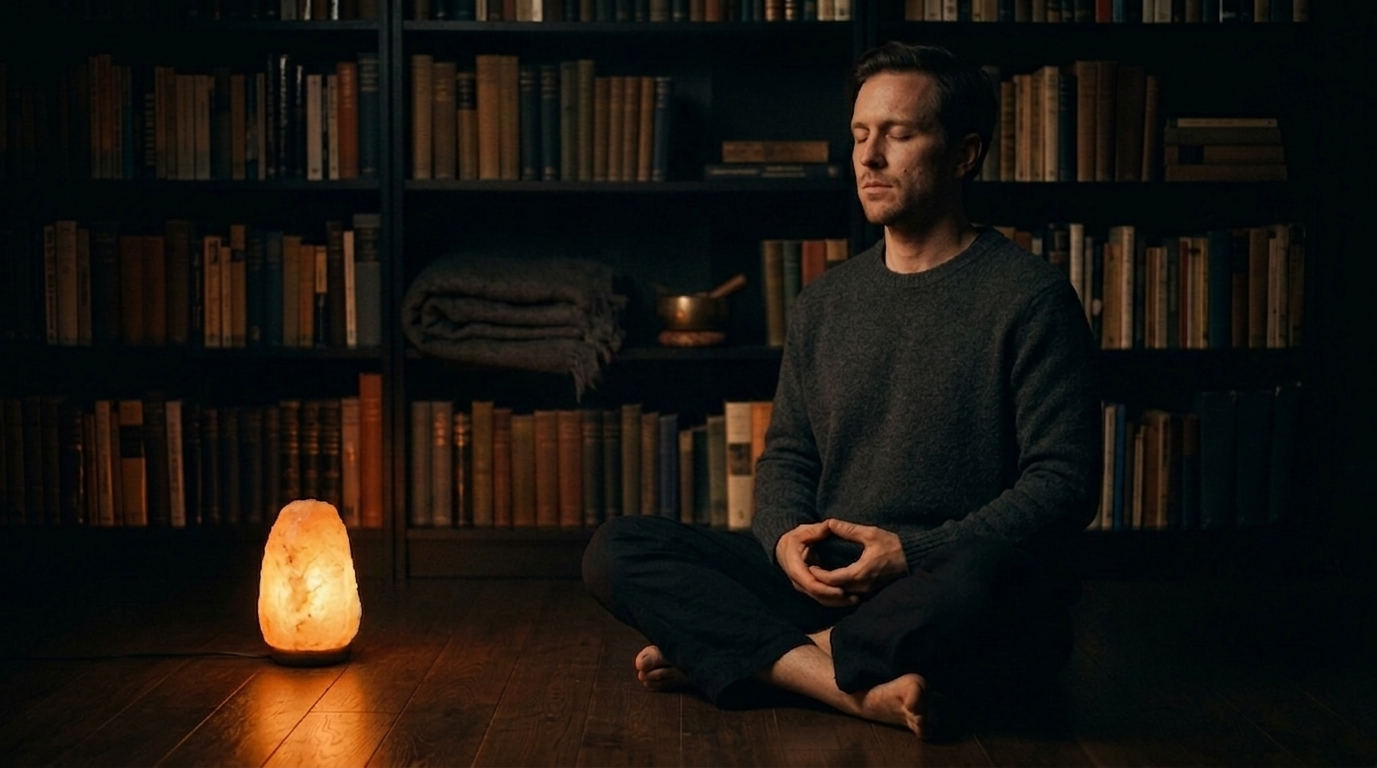
The first few times I tried to meditate I gave up inside two minutes, because my head would not go quiet and I decided that meant I was doing it wrong. It took me years to learn that the racing mind was never the obstacle. It was the raw material.
Almost everything written about meditation frames it as a way to relax or to think straighter, which is fine, but it skips the one I care about. Meditation as a spiritual practice is the ground the rest of the esoteric work stands on. It is the first skill you build because so little else functions without it, and it is the one this guide will get you started on tonight.
What Meditation Actually Is
Strip away the mystique and it is simple to define, even when it is hard to do.
Definition: Spiritual meditation is the practice of resting your attention on a single point, noticing when the mind drifts, and returning it, until the mind grows still enough to perceive what its noise usually hides.
You settle your awareness on something, the breath to begin with, and each time it slides away you notice and bring it back. Do that again and again and you have the entire exercise, the same way lifting and lowering a weight is the whole of a curl. The old traditions called this dhyana, the sustained attention that Western languages eventually flattened into the one word meditation.
Look at what the definition never asks for. Nowhere does it tell you to empty your mind, and that omission matters more than almost anything else here, because the belief that a good session is a blank one is what makes most beginners quit in the first minute. A mind produces thoughts the way a heart produces beats. A head full of them is not a broken meditation, only a working brain doing the job it evolved for.
So if not emptiness, then what? Mat Auryn hands us the clearest image I know, the mind as a pond. Stir the water and it clouds, and everything beneath the surface disappears, but let it settle and it turns clear all the way down. A still pond is not an empty pond. It is calm enough to see through, and for anyone doing spiritual work, that seeing is the entire point.

Why Meditation Has to Come First
Here is where the spiritual version parts ways with the wellness one. That clear water is not the destination, it is the tool you do everything else with. Nearly every practice further down the path leans on it, since visualisation, energy work, opening the third eye, and reading tarot with any depth all demand that you hold and steer your attention, and an unsteered mind loses the thread of all of them.
You notice the shortfall the moment you attempt anything real. You sit to build an image behind your third eye and it keeps sliding apart, and the missing ingredient turns out to be attention rather than any special gift. It runs the same way when you reach for the energy of the chakras, or try to catch the shimmer of the aura and come up with nothing. A scattered mind is the thing in your way every time, and meditation is where that scatter gets trained out.
This is the reason I stopped treating it as a warm-up to hurry through on my way to the interesting rituals. Those quiet minutes spent letting the water settle are what make astral projection, manifestation, and every finer practice work at all. Build on an untrained mind and you are laying stone on a surface that will not stop moving, which is the real reason so many people stall out on the dramatic techniques while their attention is still everywhere at once.
What Makes Meditation Spiritual and Not Just Calming
From the outside, this and the breathing exercise your doctor recommends look like the same thing, and the whole difference is what you are sitting down for. Someone meditating to decompress after work wants the calm itself, and there is nothing thin about that goal. The spiritual practitioner wants what the calm opens onto, a quieter mind to know themselves through and a door into what usually hides under the daily noise.
That difference in aim changes what you do once the quiet arrives. In stress meditation the calm is the finish line, the entire reason you sat down. In spiritual practice it is a threshold instead, the settled place you begin working from, whether that means perceiving more finely, listening inward, feeling energy move, or resting in an awareness far bigger than your thinking.
Eckhart Tolle points at the turn when he writes about watching the thinker. The instant you start observing your own thoughts rather than being hauled along behind them, you catch a first glimpse that you are the awareness underneath the thoughts and not the thoughts themselves. Being your mind, then watching your mind: that shift is the exact moment relaxation becomes spiritual work, and the whole of this guide bends toward reaching it.
How to Meditate
Enough framing. Breath is the doorway I would put any beginner in front of first, because it is always available and demands nothing you do not already carry. Here is the basic practice as Mat Auryn lays it out, plain enough to try the minute you close this tab.
- Sit comfortably and set a timer for five minutes. Feet flat on the floor, or legs crossed on a cushion, spine tall without being stiff, hands loose in your lap. The timer means you never have to wonder how long is left.
- Close your eyes and let the breath move on its own. Do not deepen it or control it, just follow it as it already is.
- Rest your attention on the breathing. Feel the air arrive and leave, feel the body answer each one, and follow the whole path of every inhale.
- When you drift, come back without the scolding. You will drift within seconds, and that is not the failure it feels like. The moment you notice you have wandered off into thought, walk your attention back to the breath as gently as you would guide a child.
- Keep going until the timer sounds. Then sit through one more breath before you open your eyes.
Step four is the one that does the work, and it is worth sitting with a second longer. Catching yourself adrift and coming back is not an interruption of the practice. It is the practice, the single repetition that builds the muscle you came for, and you will run that rep more times in five minutes than you can count.
What to Do About the Wandering During Meditation
If one idea survives this whole guide, let it be this one. A wandering mind is not the sign of failure you take it for, it is the sign that the practice is happening at all. Sharon Salzberg frames the moment you realise you have been lost in thought as a small waking-up, and that waking-up is the rep that trains everything.
The instruction stays almost insultingly simple, since you drift, you notice, and you return, over and over. At first you will do it five times a minute, then four, then three, and how many times matters far less than how you come back, which wants to be patient rather than irritated. Snapping at yourself for wandering only stacks a second distraction on the first one.
The picture that finally made it click for me was a riverbank. You are not trying to dam the river of thought, because that river never stops running, you are learning to sit on the bank and watch it go by. Thoughts stream past like the current while your one job is to stay on the bank instead of getting pulled in, and every time you notice you have been swept off and climb back up, you sit a little steadier than the time before.

Other Doorways, Once the Breath Feels Steady
Breath is where I send everyone first, but it is one door among several, and once the basic practice feels familiar another one may suit you better. Each of these tilts spiritual rather than merely soothing.
Mantra
You hand the mind a word or short phrase to hold instead of the breath, repeated silently in step with your breathing. A single syllable like Om does the job, or a short line that means something to you. The repetition settles the water the same way the breath does, and it adds a devotional weight that a lot of people find carries them deeper.
Candle Gazing
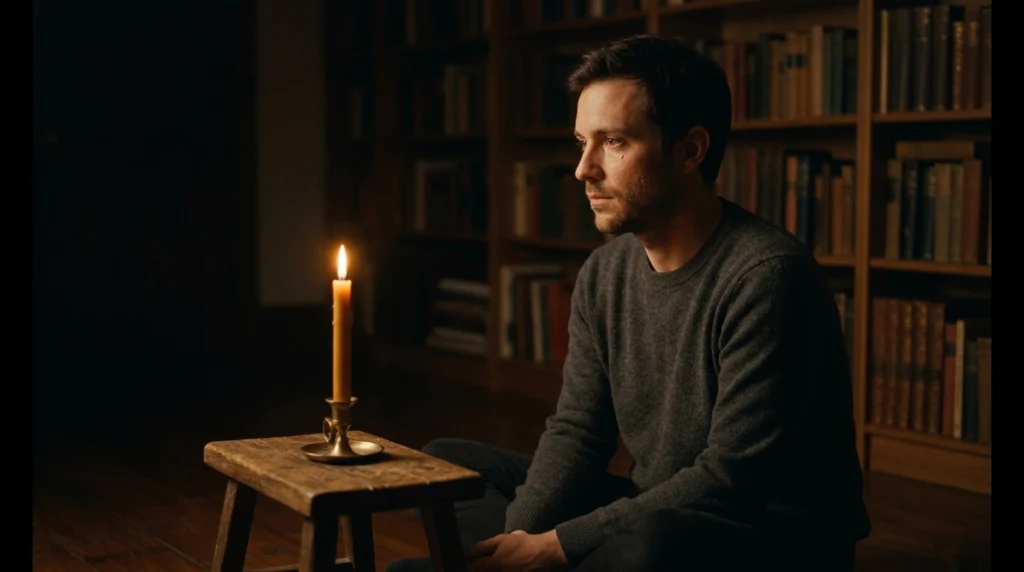
Trataka keeps the eyes open and softly fixed on a single candle flame rather than turning them inward, which a surprising number of beginners find gentler than sitting in the dark behind their own eyelids. It has a long association with waking up inner sight, and it walks you naturally toward the visualisation that later practices will ask for.
Walking and Mindful Action
Not all meditation happens sitting still. In the lineage Thich Nhat Hanh taught, you pour full attention into an ordinary act, walking, or washing a sink of dishes, and let the present moment itself be the thing you rest your awareness on. It folds the practice into a day with no spare half-hour in it.
A Few Things That Make Sitting Easier
You can practise with a chair and your own breath and nothing else, and plenty of lifelong practitioners never add a single object. A handful of simple aids still earn their place, less because they deepen the meditation than because they make the body comfortable and tell your mind the day’s practice has started. Treat every one of them as optional, never as the thing standing between you and beginning.
- A cushion or zafu lifts your hips above your knees and tips the pelvis forward, so the spine stacks upright on its own instead of fighting you. If a floor session leaves your lower back aching, this is usually the whole fix, and a folded blanket stands in until you own one.
- Incense or a fixed scent turns into a signal through nothing but repetition, until the smell alone starts tilting you toward stillness before you have even sat, the way a kettle coming to the boil tells your body that morning has arrived.
- A sound to open and close the session, a singing bowl or a bell or a soft tone, draws a clean line around the time so you stop wondering whether it is up. Some people also sit under a low steady tone like 432 Hz, which drowns the household out and gives a restless mind a texture to rest on.
- Mala beads let you count breaths or repetitions through your fingers, one bead a time, and that small physical motion keeps a wandering mind tethered better than counting in your head ever manages.
- A candle does more than serve trataka, since a single lit flame marks the space as set apart, and pinching it out at the end closes the session as cleanly as it opened.
None of it deepens the practice by itself, because the depth only ever comes from turning up day after day. What these do is lower the friction and build the small sense of ceremony that keeps drawing you back to the cushion.

What the First Few Weeks of Meditation Feel Like
Let me be straight about the early stretch, because the wrong expectations are what empty most cushions before anything has a chance to grow. Your first sessions will not feel blissful or deep, and they may feel like nothing more than five long minutes alone with a loud, busy mind, which is exactly normal and no sign at all that something is broken.
The change, when it comes, arrives quietly and on its own schedule rather than in one cinematic session. After a week or two of near-daily sitting you might notice you catch the wandering sooner, or that a brief pocket of real stillness opens and shuts, or just that an ordinary bad day lands a shade softer than it used to. The water clears by slow degrees, and the people who get somewhere are almost always the ones who kept sitting down when nothing seemed to be happening.
That patience is the whole secret, and it is worth trusting before you can feel it working. Ten minutes a day across a month will carry you further than one heroic hour ever could, because you are growing a capacity the way you grow physical strength, through repetition dull enough that you stop noticing it.
The Myths Worth Dropping Now
A short list of misunderstandings causes most of the early misery, so it is worth naming them before they trip you.
- The empty mind. The idea that you are failing unless thought stops entirely. It will not stop, you were never asked to stop it, and a clear mind rather than a blank one was always the aim.
- Not being built for it. The story that some people are natural meditators and the rest are lost causes. Nearly everyone meets the same restless mind on day one, and the only thing that sorts them later is who kept practising.
- Forcing it. Straining to calm down or to make something happen only tightens the mind you came to loosen. This is far closer to allowing than to effort, more like letting silt settle than reaching in to grab it.
- Grading each sit. Scoring a session good or bad by how peaceful it felt. The ones that feel like a wrestling match often build as much steadiness as the serene ones, and you rarely know which was which until much later.
How to Keep Meditation Going
None of this helps unless you keep at it, so early on you chase consistency and let depth take care of itself. Tie the practice to something you already do without fail, five minutes right after you wake or right before you sleep, letting it ride a habit that is already load-bearing instead of leaning on willpower you may not have that day.
Then set the bar low enough that you cannot trip over it. On a day when everything is coming apart, you sit for two minutes rather than skipping, since an unbroken chain matters far more than the length of any single link in it. A missed day means nothing on its own, but a quiet lapse of weeks is how the whole thing slips away, which makes the daily return the one part worth guarding.
As the habit hardens you can stretch the minutes and drift into the other doorways, and you will feel for yourself when the time is right rather than needing me to tell you. Meditation is the first stone in a magical practice, and once it is laid, every other technique on this site sits within easier reach, because the still, clear mind you have been quietly building is the ground all of them stand on.
FAQ
Sit somewhere quiet, set a timer for five minutes, close your eyes, and rest your attention on the breath as it already moves. Whenever the mind wanders, notice it and come back without judging the drift, since that return is the actual practice rather than a break from it. What makes the whole thing spiritual is the intent behind it, sitting to know yourself and settle the mind rather than only to unwind.
The technique is often identical, but the aim is not. Regular meditation usually reaches for relaxation or sharper focus, while spiritual meditation treats that same calm as a doorway into knowing yourself, sensing energy, and opening to something larger. In one the calm is the destination, and in the other it is only where the real work begins.
Start at five minutes a day and stretch toward ten or twenty as it stops feeling like a chore. The early morning tends to hold the stillest mind, before the day crowds in, though the honest best time is whichever one you will keep. A short daily sit outperforms a long occasional one every time.
Nodding off usually means the body is tired or the posture has gone too soft, so sit upright rather than lying down, and try meditating with the eyes slightly open or at a brighter hour. A little drowsiness early on is common and thins out as the practice sharpens your attention.
Most people feel small shifts within two or three weeks of near-daily sitting, usually a quicker catch on the wandering or a steadier baseline through the day. The deeper spiritual openings take months and years, and they come on their own schedule rather than because you scheduled them.
No. A quiet corner, a few minutes, and the willingness to be a beginner are the whole kit. Cushions, incense, beads, and sound are all optional supports rather than requirements, and some of the deepest practitioners alive use nothing but the breath and somewhere to sit.