Something caught your attention, a video, a conversation, an experience you could not explain, and now you are here wondering whether beginner magic is actually real and whether you are the kind of person who does this. Both of those questions are reasonable, and neither of them needs to be answered before you start.
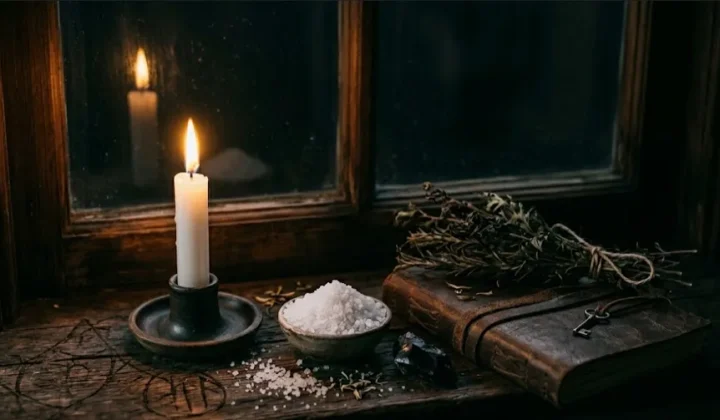
What you actually need for a magical practice for beginners is salt, a candle, a notebook, and twenty minutes somewhere you will not be interrupted. The rest, the tradition, the tools, the altar, the moon phases, all of it can wait until you have done something once and know what it felt like.
Do You Need to Believe in Magic?
You do not need to believe in magic for a magical practice to work. Waiting until you are convinced is not a prerequisite: it is a delay tactic.
I came to this work as a skeptic who found the subject slightly embarrassing, not through curiosity or spiritual pull but because something was happening I could not explain and could not stop. Protection magic was what I reached for first, because protection was what I needed, and everything else grew from there over months of figuring out what actually worked.
The belief question matters less than most people think because belief is not the mechanism that produces results. Consistent intentional action is. Whether you explain what happens as psychology, as energy work, or as an experiment you are running to see what comes of it, the action looks the same. Two weeks of daily sessions do more for the belief question than two months of reading.
Feeling ridiculous is both normal and predictable, and it passes faster than you expect. The reason has something to do with what happens when a practice starts producing results you cannot dismiss, but that explanation only makes sense after it has already happened.
What Magic Actually Is
Definition: Magic is the practice of directing focused intention through deliberate action to produce a specific outcome. The ritual component, whether a candle, a salt line, or a spoken word, creates a container for concentrated attention, and that attention applied consistently and repeatedly is what produces results over time.
Most introductory definitions go mystical here, and I understand the appeal. But “working with universal energy to manifest your desires” gives you nothing to do and no way to evaluate whether you did it, which means it is less useful than it sounds.
What I can say from direct practice is that intentional action directed at a specific outcome consistently produces different results than the same action performed without attention, and spaces accumulate the quality of what happens in them. A threshold you have marked with salt and clear intention feels different from one you have not, in a way that is subtle at first and becomes more legible as the practice develops.
Folk Magic vs. Wicca vs. Ceremonial Magic
Weeks of researching traditions before doing a single ritual is the wrong sequence, and it usually ends with no practice and no tradition either.
The three traditions that come up most in beginner research are folk magic, Wicca, and ceremonial magic, and most introductory content implies they are the same thing when they are not. The entry requirements are completely different.
Definition: Folk magic is practical, non-initiatory, and rooted in household materials. It does not require deity work, seasonal observance, or initiatory lineage. Salt, herbs, spoken intention, and protective boundaries are the core vocabulary, and most of what is described on this site sits in this tradition, including the Balkan and Mediterranean practices I know best.
Wicca is a modern neopagan religion that incorporates witchcraft rather than being synonymous with it. It involves deity work, observance of the Wheel of the Year, and often coven practice. The spiritual component is central, not incidental, which is why most introductory content that treats Wicca and witchcraft as the same word creates confusion.
If the spiritual dimension appeals to you, Wicca is a coherent path with real depth. But it is not a prerequisite for magical practice, and treating it as such is one of the main reasons beginners stall.
Ceremonial magic is structured, grimoire-based, and genuinely requires sustained study before practice, because the systems of Agrippa, the Goetia, and the Golden Dawn have real prerequisites and do not reward casual entry.
You can practice folk magic for years without touching Wicca or ceremonial work, and the choice between them becomes interesting only after you have handled salt and spoken intention enough times to know what kind of practitioner you are becoming.
What You Need to Begin
If you have zero budget, the zero-cost version of this guide shows what you can build with nothing purchased at all. This article takes a different approach: a small, deliberate investment in the right things from the start makes the practice significantly easier to sustain, and the list is shorter than most people expect.
What to Buy First
Sea Salt
Sea salt is the foundation of almost every protective practice documented in folk magic traditions, marking boundaries, absorbing hostile energy, and neutralizing what you want removed. It appears in Southern American hoodoo, Balkan folk magic, West African tradition, and classical Mediterranean practice independently, which is not coincidence.
Coarse sea salt gives your fingers something specific to hold while forming intention, and that tactile anchor changes the quality of the work. A bag from any grocery store costs almost nothing and lasts months.
Candles
Buy a small pack of white candles. Fire represents directed will in most Western magical traditions, and the lit flame gives your attention a fixed point during a session that an empty room does not.
White handles every intention at the start. Later you will want specific colors for specific intentions, but at the start white covers everything.
A Dedicated Notebook
Use a physical notebook near your working space, not a phone. What you record is simple: date, moon phase, stated intention, tools used, what you noticed, and any results you observe over the following week.
After six months, those entries show patterns your memory would have dismissed as unrelated. The notebook is where the practice learns from itself, and without it most people repeat the same first month indefinitely.
A Protective Crystal
Black tourmaline absorbs hostile energy and holds it, which means it works passively at a threshold or in a pocket without requiring your active attention. It is the right first crystal for a protection-focused beginner practice.
A small raw or tumbled piece costs three to five euros at most crystal shops or online. Place it near your front door with a clearly stated intention, and cleanse it monthly by leaving it in dry sea salt for a few hours.
Obsidian is the alternative if you want something that reflects rather than absorbs, but the distinction matters in practice: obsidian sends energy back toward its source, which is not always what you want at the beginning. Start with black tourmaline and add obsidian once you understand how they work differently.

A Cleansing Tool for Your Space
Your working space needs to be cleansed before sessions and periodically between them. Three options, in order of accessibility:
Dried rosemary is the easiest and the most cross-culturally documented option. Tie a small bundle, light the end until it smokes, blow out the flame, and move through the space while stating what you are clearing. Rosemary appears in Mediterranean, Balkan, Slavic, and Northern European protective traditions independently.
It is cheap, available in any herb shop, and does not carry the cultural sensitivity concerns that white sage does. The kitchen herbs guide covers rosemary and the other herbs worth having.
Frankincense resin on a charcoal disc produces heavier, longer-lasting cleansing smoke. Light a charcoal disc, wait for it to ash over, then add a small piece of resin. Frankincense has been used in ritual cleansing across ancient Egyptian, Greek, Roman, and Middle Eastern traditions for thousands of years.
A bag of charcoal discs and a small jar of frankincense resin together cost less than ten euros.
A bell is the third option if smoke is not possible in your space, working by breaking up stagnant energy with vibration rather than smoke. Ring it in each corner of the room moving clockwise, starting at the door. This approach appears in Tibetan, Balkan, and various other cleansing traditions and leaves no residue.
Your Voice
Spoken intention is more precise than silent intention, because speaking forces an intention into a specific shape while mental intention tends to soften and drift at the edges. This costs nothing, but it is listed here because most beginners underuse it. Every serious magical tradition uses spoken words, and your own words work better than borrowed formulas you have not yet made yours.
Three Skills That Make Everything Else Work
Grounding, energy sensing, and clear intention setting are the three skills that make everything else in magical practice produce results rather than theater. Most people who quit in the first month do so without having established any of them, because most beginner guides treat them as preliminary steps rather than as the practice itself.
Grounding
Grounding is establishing stable bodily presence before doing any intentional work. You cannot direct focused attention outward when your attention is scattered internally, and most people start sessions in a scattered state because they have moved directly from ordinary daily life into the work without a transition.
To ground: sit or stand with feet flat on the floor, breathe slowly and deliberately for two to three minutes, and visualize roots extending downward from the soles of your feet into the earth below. You are looking for a felt sense of weight and stability in your lower body, a quality of being present in this specific room rather than wherever your mind was a few minutes ago.
Two to three minutes done with genuine attention produces a noticeably different quality of focus than starting cold. Thirty seconds done impatiently produces nothing.
Energy Sensing
Energy sensing is the practice of noticing subtle physical sensations your nervous system normally filters out, then training yourself to associate those sensations with specific conditions in a space.
A concrete starting exercise: rub your palms together briskly for thirty seconds, then hold them facing each other about six inches apart and move them slowly closer and farther apart. Most people can feel something between the palms as they do this, a warmth or mild resistance that shifts as the distance changes. That sensation is a real physical experience produced by the body’s bioelectrical field, not an imagined one, and it is trainable with practice.
This skill matters because it gives you a diagnostic tool for your own work. The main uncertainty in early practice is whether anything is happening at all. The ability to notice a shift in the quality of attention in a room before and after a working is how you start answering that question from observation rather than assumption.
Intention Setting
Clear intention is the most variable factor in any magical working, and the most reliably underperformed one. The failure mode is not bad intention but competing intention: wanting the outcome while simultaneously doubting the process, half-expecting nothing to happen, or running a quiet background assumption that you are probably doing this wrong.
An intention you can state in one specific sentence, held without dissolving into qualification or distraction, does more than any elaborate ceremony performed with divided attention. Before doing anything else in a session, state in one sentence what you are doing and why.
“I am establishing a protective boundary around this space” is a working intention. “I want things to be generally better” is not, because it has no shape for anything to take.
Your First Session
This is a simple first session for establishing protective intention in a space. It needs salt, a candle, and twenty uninterrupted minutes. Do it with full attention or wait until you can.
- Tidy the space. Physical clutter interferes with focused intentional work, and no amount of ritual precision compensates for the scattered quality of attention a disordered space produces.
- Ground for three full minutes. Feet flat, slow breathing, roots visualization. Do not skip this and do not rush it.
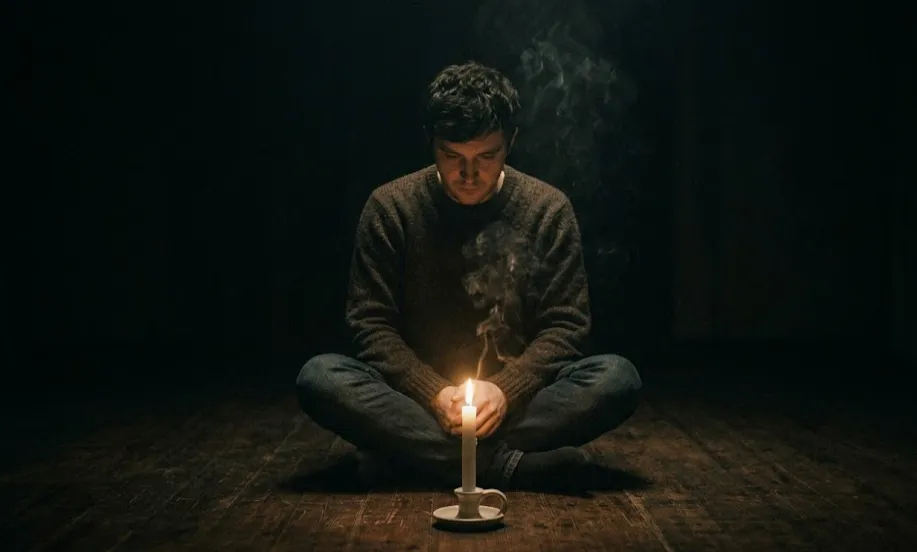
- Light the candle. State your intention out loud in one sentence, directed at the room rather than at yourself. Speaking to the room changes the quality of the statement.
- Place the salt. Take a pinch between your fingers, hold it while thinking specifically about what you want it to do, then place a small amount in each corner of the room moving clockwise. Speak briefly to each placement.
- Hold the intention. Return to the candle. Hold your stated intention for as long as it remains clear and unqualified. When it starts to dissolve or your attention drifts, the session is done.
- Close deliberately. Extinguish the candle intentionally. Say something brief to close: “This work is done” is sufficient.
- Write in your notebook. Record the date, intention, tools used, and what you noticed. That entry becomes evidence later.
Most people who quit at week two decided it was not working. By week four something shifts if you were consistent, in the quality of the sessions themselves before any external result arrives.

What Consistent Practice Looks Like
Spellwork for beginners does not need to be elaborate. The minimum viable daily session is three minutes of grounding, one clear intention stated aloud, and one small action that reinforces it.
That action can take different forms depending on what you are working on: placing a line of salt across a threshold, lighting a candle and holding a specific thought until it feels stable, or speaking a brief protective formula before leaving the house. The action does not need to be impressive. It needs to be repeated.
The first week will feel like almost nothing is happening, and so will the second. By the end of the first month, most people notice a shift in how the practice feels, a quality of ease and familiarity that was absent at the start, and that shift is the practice becoming yours rather than remaining an external procedure you are following.
Common Mistakes That Stall Beginners
Most beginners fail by over-preparing and under-practicing, which reverses the actual priority. The specific mistakes are predictable enough that I made most of them before figuring out the actual pattern.
Where Most Beginners Lose Months
Studying Instead of Practicing
Reading about starting witchcraft feels like progress, but the brain is treating it as a substitute for the thing itself, which is why months can pass between first interest and first session. Doing something small today and repeating it is more productive than reading one more article, including this one.
Waiting for Ideal Conditions
Beginners wait for the full moon, for a complete altar, for the right crystals, or for enough knowledge to feel qualified. None of those conditions ever arrive fully, and waiting for them is how months pass without a single session.
Telling Everyone Immediately
A new practice announced publicly tends to drain the energy that belongs in the work, especially if it meets skepticism before it has produced anything you can point to. I did not tell anyone for the first six months, partly from embarrassment and partly because the work felt too fragile to hold up to someone else’s opinion of it.
That turned out to be the right instinct. Silence is a protective tool while something is still being built.
Buying Before Doing
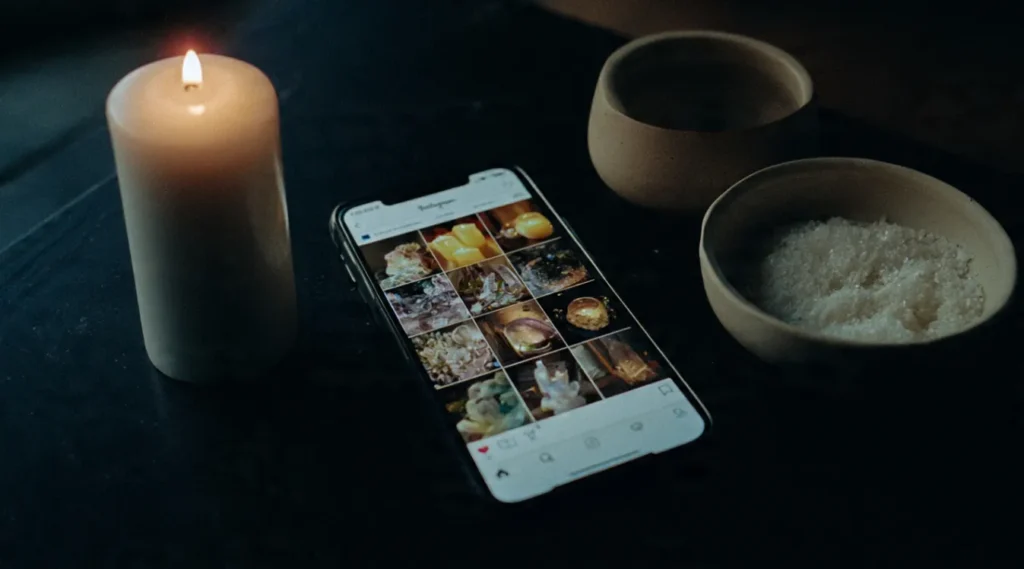
No single tool is essential at the start. Any source that insists you need a specific object to be a real practitioner is trying to sell you something, and the beginner witchcraft market is large enough that this framing is everywhere. Salt from your kitchen and a candle from any drawer outperforms a curated kit used without attention.

Expecting Immediate Proof
The first week feels like nothing, and so does the second. By week four something shifts, but only if you were consistent through the weeks where nothing appeared to be happening, and most people quit at week two because they made a decision before they had enough data.
Skipping the Notebook
Memory is unreliable in ways that only feel obvious in retrospect, which means the shift you noticed at week three gets dismissed by week five because you cannot remember it clearly enough to trust it. The notebook is the difference between a practice that learns from itself and one that keeps looping.
How to Know If It Is Working
The earliest signal is internal, and it arrives before any external evidence: a quality of focus and stability during the session that feels distinctly different from ordinary distracted thinking, where grounding has actually landed and the intention is held clearly rather than dissolving into background noise.
External results develop slowly and are usually subtler than beginners expect. A space that consistently feels different after you have worked in it, or encounters with people who would previously have drained you landing with noticeably less force after weeks of consistent protective work, are the kind of evidence that accumulates rather than arriving all at once. The guide on protecting your energy from draining people covers the specific methods for that if it becomes a priority.
You move from thinking you might be doing something to knowing you are through accumulated observation, not through a single dramatic event. Your notebook is where that accumulation becomes legible, usually around the six-week mark, in patterns your memory would have dismissed as unrelated.
What to Add Once the Practice Is Running
Add nothing new during month one, because the baseline skills need to become automatic first. Grounding should take a minute instead of three, intention should set without effort, and only then does adding tools make sense, because before that point you are adding things to an absent foundation.
Month Two: Dried Herbs
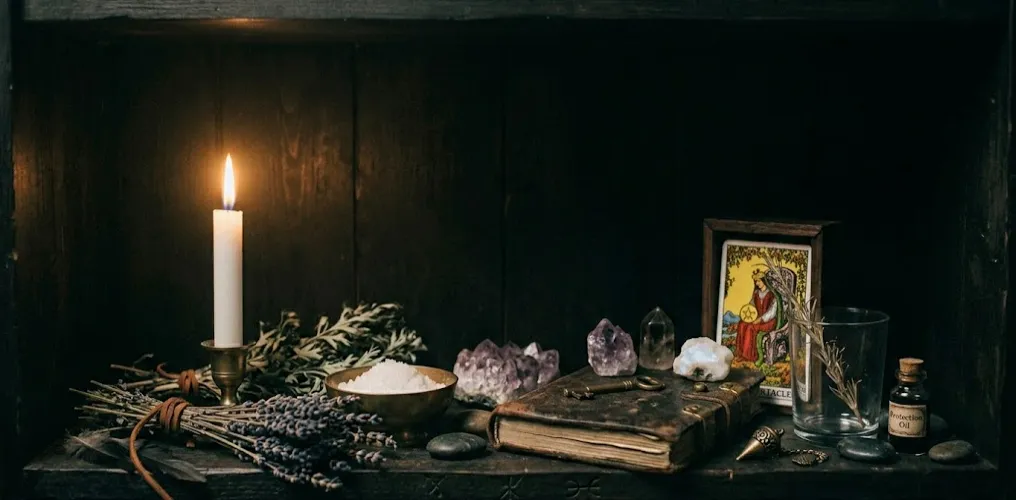
The first herbs worth adding to a protection practice are rosemary, garlic, and bay leaf. All three appear independently across Mediterranean, Balkan, Slavic, and Northern European folk traditions with the same basic function: purification, warding, and boundary reinforcement.
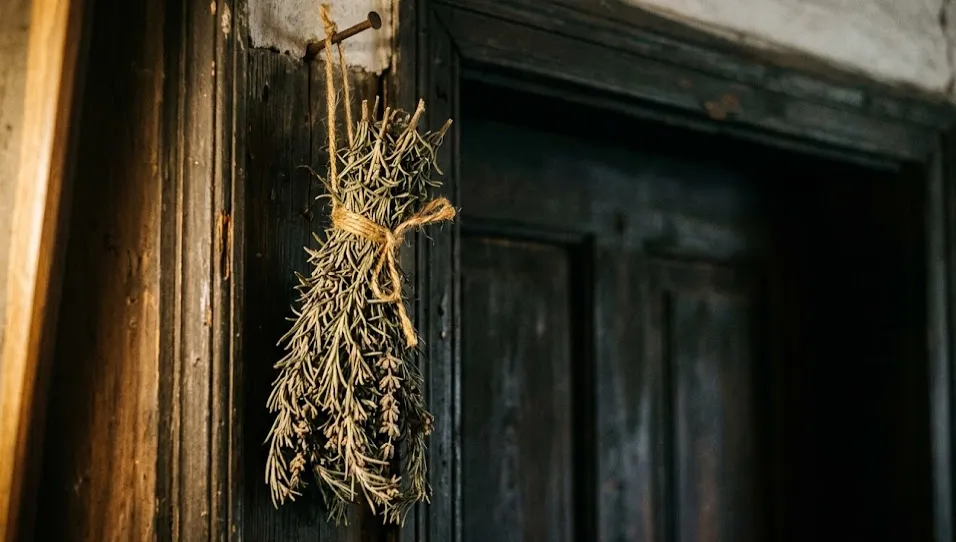
A bundle of dried rosemary hung near a door does continuous passive work without requiring your attention, which is exactly the right kind of tool for a practice still being consolidated. By this point the herbs guide covered in the What You Need section will have given you the starting framework.
Month Two or Three: A Protective Stone
Black tourmaline and obsidian are the two protective stones worth starting with, and the difference between them is practical rather than aesthetic. Black tourmaline absorbs hostile energy and holds it, which means it saturates over time and needs cleansing regularly. Obsidian reflects energy back toward its source, which is a different function and not always what you want in every situation.
One small piece of either, placed deliberately at a threshold with a clear stated intention, adds a passive layer that operates independently of your daily session. I am genuinely uncertain about the mechanism for both, but the absorb-versus-reflect distinction is consistent enough across traditions that I treat it as practically meaningful.
Month Three: Black Salt
Black salt made with ash from burned rosemary or other protective herbs handles situations where regular salt is not holding. The distinction matters because black salt absorbs and neutralizes rather than simply marking a boundary, and combining it with the herbs you are already using creates a coherent layered system. The black salt article covers the three types and which situations call for which.

Month Three or Four: A Divination Tool
A tarot deck or a pendulum gives you a way to check your own work rather than relying entirely on felt sense. One deck worked with daily for ten minutes builds pattern recognition faster than any course, because the feedback loop is immediate and personal rather than general and instructional.
Month Four Onward: Anointing Oils
A simple protection oil, olive oil base with rosemary and frankincense, extends the reach of intention-setting into objects and spaces in a way that neither herb nor stone alone achieves. Anointing a candle before lighting it, or running oil along a doorframe while stating protective intention, combines two layers of work into one action rather than performing them separately.
The preparation takes ten minutes: fill a small dark glass bottle with olive oil, add a sprig of dried rosemary and a small piece of frankincense resin, seal it, and leave it for two weeks before first use. That two-week wait is not ritual requirement, just the time the oil needs to infuse.
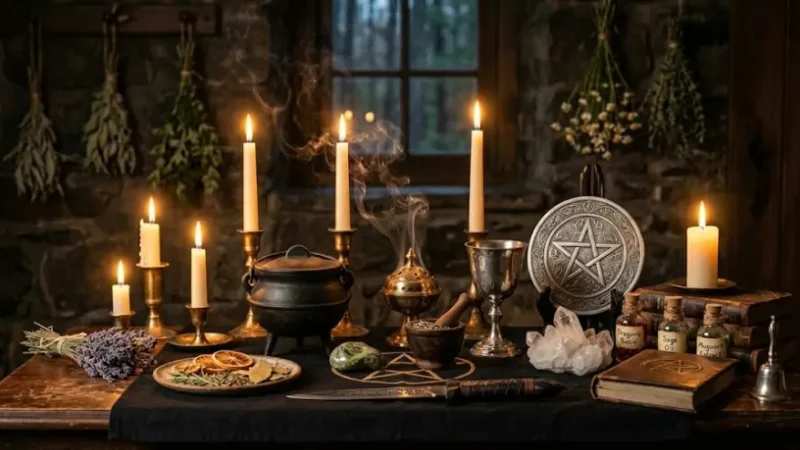
What you do not need to add at any stage: a cauldron, an athame, a wand, subscription boxes, or curated starter kits. Those objects exist largely because they photograph well. None of them is where the practice comes from.
The essential occult reading list covers where to go next once the practice is running, sorted by focus area and tradition.
FAQ
Ground for three minutes, state one clear intention out loud, take one small action that reinforces it, and repeat daily. The starting point is not studying a tradition or buying tools but establishing consistent daily contact with intentional work.
Salt, a candle, and a notebook are sufficient for the first month. Your own spoken words carry intention more precisely than borrowed formulas you have not yet made yours.
Starting without a specific tradition is usually better. Choosing one before you have practice experience means choosing on aesthetics. A few months of basic daily work gives you something real to match a tradition to.
Consistent intentional action produces results whether you explain them as psychology, energy, or experiment, so belief is not the mechanism. Two weeks of daily sessions does more for the belief question than two months of reading.
The earliest signal is internal: a quality of stability and focus during the session distinct from ordinary distracted thinking. External results develop slowly, so tracking small repeated changes over weeks is more reliable than waiting for a single dramatic event.